Search
Close this search box.

The Case of Caste Census: Time to Implement, BIMSTEC and Myanmar, India’s Dengue Surge

Table of Contents

(General Studies I – Society Section – Salient features of Indian Society, Diversity of India and Social Empowerment, Communalism, Regionalism & Secularism.)

  • Caste Census refers to the demand to include the caste-wise tabulation of India’s population in the upcoming census exercise.
  • Caste, a powerful cultural underpinning of Indian society, was last included in the Indian Census in 1931.
  • The demand now is to amend The Census Act, 1948, to make enumeration by caste mandatory.

What is the Need for a Caste Census?

Peter Drucker famously said, “Only what gets measured gets managed.” Since caste remains a fundamental social construct in India, it is imperative to conduct a caste census for the following reasons:

  1. Social Imperative:
  2. Caste continues to be a fundamental social construct in India. Only approximately 5% of Indian marriages were inter-caste in 2011-12.
  3. The use of surnames and caste marks is still widespread, and residential segregation by caste persists.
  4. Choices of candidates for elections and ministers for cabinets continue to be dictated by caste considerations.
  5. Legal Imperative:
  6. Constitutionally mandated policies of social justice, including reservations in electoral constituencies, education, and public employment, cannot be pursued effectively without detailed caste-based data.
  7. Administrative Imperative:
  8. It is necessary to avoid the wrongful inclusion of undeserving and privileged individuals within backward castes.
  9. Moral Imperative:
  10. The absence of detailed caste data has allowed a coterie of elites among upper castes and dominant other backward classes to corner a disproportionate share of the nation’s assets, income, and positions of power.
  11. Constitutional Mandate:
  12. The Constitution of India provides for reservations in education and public employment for OBCs. Enumerating OBCs in the Census is essential to effectively implement these constitutional provisions and ensure accurate representation.
  13. Policy Implementation:
  14. Detailed caste-wise data is necessary for effective policy formulation and implementation related to reservations, social justice, and welfare schemes targeting the OBC community.
  15. Judicial Imperative:
  16. The Supreme Court of India, in various rulings like the Indira Sawhney case (1992), has underscored the importance of accurate caste data for upholding reservation policies and ensuring social justice.

Arguments Against a Caste Census

  1. It is Socially Divisive:
  2. Critics argue that emphasizing caste through a census could perpetuate social divisions and caste identities. They fear that highlighting these differences could exacerbate tensions and hinder national unity.
  3. It is an Administrative Nightmare:
  4. Conducting a caste census is seen as administratively challenging due to the number of castes in India, estimated to be in the thousands, many of which are region-specific.
  5. It Could Fuel Demands for Increased Reservations:
  6. There are concerns that caste data could be misused for electoral gains and identity politics. Critics argue that caste enumeration could lead to demands for increased reservations and create further divisions along caste lines in political representation.

An attempt was made in 2011 though The Socio-Economic and Caste Census (2011) to enumerate the caste but this exercise was carried outside he census ex, conducted through the Union Ministry of Rural Development and Urban Development, which lacked the expertise and experience for a sociological survey.

Way Forward

  1. Amend the Census Act, 1948:
  2. Explicitly include caste as a parameter for enumeration. This legal revision will provide a clear mandate and framework for conducting a comprehensive census.
  3. Engage Sociological and Anthropological Experts:
  4. Develop a detailed list of caste categories specific to each state. Publish the draft list online for public review and feedback, facilitating transparency and accuracy in caste enumeration.

A caste census may not align perfectly with the goal of a casteless society, but it may serve as a means of addressing inequities in society. However, an objective assessment of the caste dynamics in the current situation is necessary to make more targeted and innovative policies to pursue a goal of a more equal society. Further it will satisfy the demands of both the supporters and opponents of caste census by presenting a view based on data rather than imagination.
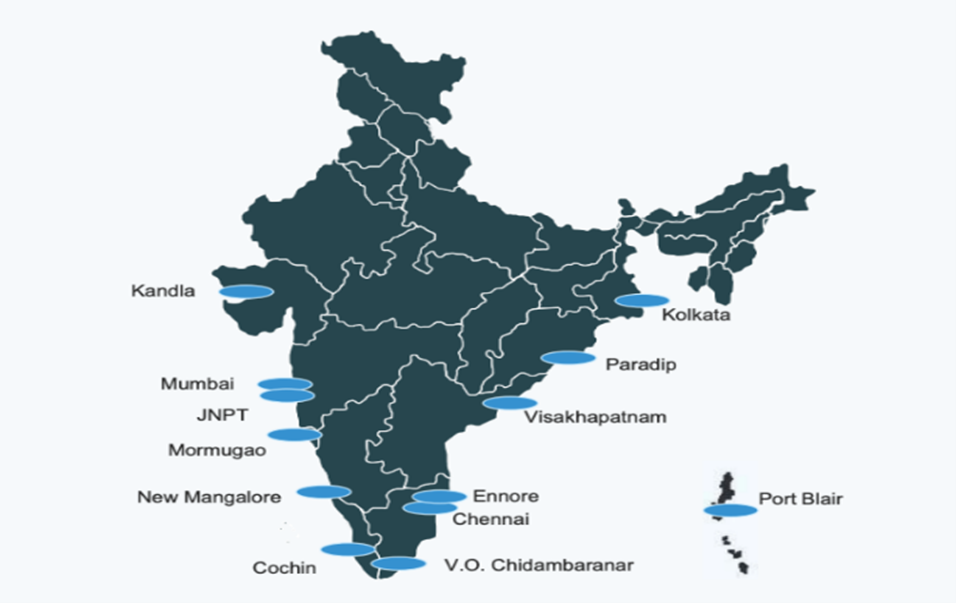
  • Vizhinjam international seaport is India’s first deep-water container transshipment port.
  • It scripted a new chapter in the maritime history of the country, the first mothership carrying cargo from the Xiamen port in China called at the Vizhinjam port.
  • The ship was accorded a water salute at the port.
  • It is one of the major flagship infrastructure projects promoted by the Kerala government with the Adani Group in the public–private partnership (PPP) mode.
  • Port has a natural depth of more than 18 metres, scalable up to 20 metres, which is crucial to allow entry of large vessels and motherships.
  • The port is located 10 nautical miles from the international shipping route.
  • Other advantages of the port are minimal littoral drift along the coast and virtually no requirement of any maintenance dredging.
  • The port is expected to compete with Colombo, Singapore, and Dubai for trans-shipment traffic.
  • It is expected to bring down the cost of movement of containers to and from foreign destinations.
  • The project, which was scheduled to be commissioned in 2019, got delayed and missed several deadlines due to various reasons.

Dig Deeper: Read about increased efficiency of Major port (turnaround time), significant Private ports.

BIMSTEC Charter
First charter came into force in May 2024. 
It will open way to new members and observers.
Adopted during the 5th summit, provides BIMSTEC with a legal personality, enabling structured diplomatic dialogue with other entities.
It reaffirms India’s commitment to reflecting the Neighbourhood First and Act East policies.
The charter establishes a framework for meaningful cooperation and deeper integration in the Bay of Bengal region.
  • 2nd edition of Foreign Ministers retreat of BIMSTEC is being held in Delhi.
  • External Affairs Minister of India emphasized the need for the Bay of Bengal Initiative for Multi-Sectoral Technical and Economic Cooperation (BIMSTEC) to find solutions to regional challenges internally.
  • The retreat marked a landmark development as it was the first event since the BIMSTEC Charter came into effect. The organization struggled to reach a consensus on a common charter for years.
  • Amidst significant developments in Myanmar, where the military junta is facing setbacks from ethnic armed organizations (EAOs).
  • Myanmar’s instability has jeopardized several developmental and connectivity projects crucial for BIMSTEC countries, including Nepal, Bhutan, India, Bangladesh, Myanmar, and Thailand.
BIMSTEC
Formed in 1997 through Bangkok Declaration, BIMSTEC includes Bangladesh, Bhutan, Sri Lanka, Nepal, Thailand, Myanmar, and India.
BIMSTEC secretariat is located in Dhaka, Bangladesh.
BIMSTEC has gained prominence amid the stagnation of the South Asian Association for Regional Cooperation (SAARC), which last met in 2014.
Recently, Nepal’s parliament ratified the charter, enabling its enforcement. Nepal maintains that BIMSTEC is not a replacement for SAARC
Previously, BIMSTEC faced challenges, including discord between Bangladesh and Myanmar over Rohingya refugees.
 
  • The military junta’s in Naypyidaw recently loss of control over Naungcho, a major town along a trade highway to China to the Ta’ang National Liberation Army underscores this instability.
  • Currently Humanitarian aid from India to civilians is limited to displaced populations and military personnel seeking refuge in Mizoram.
  • India has maintained a cautious stance on the Myanmar crisis, focusing on countering transnational crimes like cyber threats, narcotics, and illegal arms.

Dig Deeper: Read about various BIMSTEC initiatives for connectivity among member countries.

  • In Pune, Maharashtra, 15 cases, including eight pregnant women of Zika reported. In Karnataka, A person with Zika died, another suspected case is under investigation.
  • Union Health Ministry: Advised states to be vigilant, screen pregnant women, and strengthen entomological surveillance and vector-control activities.
  • Indian Council of Medical Research (ICMR) recommended increased testing for Zika, including patients with chikungunya and dengue-like symptoms who test negative for these infections.

What is the Zika Virus?

  • Zika is a mosquito-borne virus first identified in Uganda in 1947, primarily transmitted by Aedes aegypti mosquitoes, which also spread dengue and chikungunya. It can also be transmitted sexually, from mother to fetus, and through blood transfusions.
  • Most infected individuals are asymptomatic.
  • Symptoms, if they occur, typically start 3–14 days after infection and include rash, fever, conjunctivitis, muscle and joint pain, and headache, lasting 2–7 days.
  • Diagnosis is based on symptoms and confirmed through laboratory tests. However, there are gaps in diagnostic capabilities in India, with samples sent to select labs like the National Institute of Virology, causing delays.
  • Zika infection during pregnancy can cause microcephaly and other congenital malformations, preterm births, and miscarriages.
  • It is also associated with Guillain-Barré syndrome, neuropathy, and myelitis in adults and children.

Vaccine Development:

  • There is currently no vaccine for Zika virus infection.
  • Research is ongoing, with promising results from Bharat Biotech’s “killed Zika virus vaccine,” which showed 100% efficacy in animal studies.
  • Indian Immunologicals Limited is also working on developing a vaccine.

Dig Deeper: Read about Microcephaly and Guillain-Barre syndrome.

  • Dengue cases have surged in India, with significant increases in Karnataka, Kerala, and Tamil Nadu.
  • According to the National Centre for Vector Borne Diseases Control, as of April, India recorded 19,447 cases, with Kerala and Tamil Nadu leading in numbers.
  • The World Health Organization (WHO) reported over 7.6 million dengue cases globally in 2024.
  • As of May, 90 countries have known active dengue transmission, not all captured in formal reporting.
  • The monsoon season, urbanization, and population movements have increased the burden in regions like Asia, the Americas, and the Western Pacific, with Asia accounting for around 70% of the global disease burden.
  • Dengue is spreading to new areas in Europe, the Eastern Mediterranean, and South America.

Dengue Transmission and Treatment:

  • Dengue virus is transmitted to humans through the bite of infected Aedes aegypti mosquitoes.
  • While most cases are asymptomatic or mild, severe dengue can cause shock, severe bleeding, or organ impairment.
  • According to the National Guidelines for Clinical Management of Dengue Fever, dengue presents as an acute febrile illness lasting two to seven days, characterized by symptoms such as headache, retro-orbital pain, myalgia, arthralgia, rash, and hemorrhagic manifestations.
  • Without warning signs or complications, dengue is managed through symptomatic and supportive treatment.
  • Researchers and public health experts monitor emerging patterns in dengue.
  • Factors contributing to increasing dengue epidemics include the
  • Changing distribution of the Aedes aegypti vector,
  • Urbanization,
  • Human activities that create conducive environments for vector-host interaction,
  • Climate change-induced weather pattern shifts.

Dig Deeper: Compare Dengue and Zika.