Search
Close this search box.

Simultaneous Arrival of Monsson, Monsoon Croaks Bioblitz 2024, SRO for FinTech

Table of Contents
  • The Chennai-headquartered space start-up Agnikul Cosmos Private Ltd. launched the world’s first rocket — Agnibaan Sub Orbital Technology Demonstrator (SOrTeD) — with a single-piece 3D-printed engine from Sriharikota.
India’s Private Space Sector
India’s first privately developed rocket, from the company Skyroot, flew in 2022.Dhruva Space is developing small satellites while Bellatrix Aerospace specialises in propulsion systems for satellites.In 2020, India opened the space sector for private players.In February 2024, the FDI policy changed to allow foreign investment in the manufacture of components and systems or sub-systems for satellites up to 100% without approval.To build satellites, up to 74% of the investment is without approval; for investment in launch vehicles, an investment could go up to 49%. 

Agnibaan SOrTeD is India’s first launch from a private launchpad, called ‘Dhanush’, established by Agnikul.

  • All other launchpads are operated by ISRO.
  • It is also India’s first semi-cryogenic engine-powered rocket launch.
  • The Indian Space Research Organisation (ISRO) has not successfully flown a rocket with a so-called “semi-cryogenic” engine.
  • It is also the world’s first single-piece 3D-printed (additive manufacturing) engine designed and built indigenously.
  • According to the start-up, the key purpose of this mission is to serve as a test flight, to demonstrate in-house and homegrown technologies, gather crucial flight data and ensure optimal functioning of systems for Agnikul’s orbital launch vehicle, the ‘Agnibaan’.
  • Agnikul Cosmos Private Ltd. is a IIT-Madras incubated start-up.

Dig Deeper: Read about the space regulator- the Indian National Space Promotion and Authorisation Centre (IN-SPACe), and the Indian Space Association (ISpA).
  • In an unusual turn, the monsoon simultaneously set in over Kerala and northeastern India.
  • The monsoon system has two branches — the Arabian Sea branch and the Bay of Bengal branch.
  • The onset of the monsoon is defined with the Arabian Sea branch setting in over Kerala, which is usually June 1 and the other, setting in by June 5.
  • The two branches eventually merge over Central India and sustain the southwest monsoon until September.
  • This time however, partly under the influence of Cyclone Remal, the eastern branch arrived in Nagaland, Manipur, Mizoram, Arunachal Pradesh and most parts of Tripura, Meghalaya and Assam on May 30.
  • Since 1990, such an onset has been reported in 1991, 1995, 1997, 2017 and now in 2024, according to data from the IMD.

Dig Deeper: What are the causes for the ‘breaks in Monsoon’?

  • The Centre for Citizen Science and Biodiversity Informatics under the Kerala Forest Research Institute (KFRI) is organising Monsoon Croaks Bioblitz 2024, a citizen science programme aimed at documenting the frogs of Kerala during the monsoon.
Global Biodiversity Information Facility
All scientific observations made available during the Bioblitz will become part of the Global Biodiversity Information Facility (GBIF), a biodiversity open-source database. The GBIF secretariat is located in Copenhagen.This information can be used for biodiversity awareness, habitat conservation, climate change research and policy making.

A bioblitz is an intensive survey conducted over a period of time to identify as many species as possible within a designated area, earlier held in 2023.

  • In the Monsoon frogs are most active and breed during the rain.
  • The survival of frogs indicates the ecosystem’s health, which is challenged by many factors such as climate change, untimely rainfall patterns, habitat loss and water pollution.
  • As a result, 41% of the world’s frogs are on the IUCN (International Union for Conservation of Nature) Red List of endangered species.
  • The Kerala has over 200 frog species.
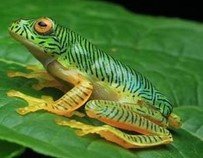
Figure 3 Anamalai gliding frogIucn status: Critically endangered

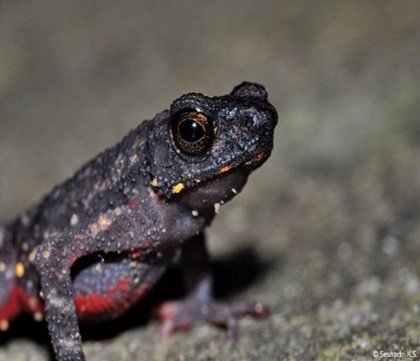
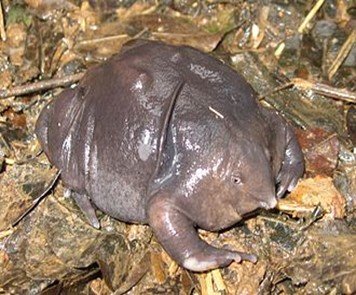
Red-listed frog species of western ghat like the Malabar torrent toad (Ghatophryne ornate), Anamalai Gliding Frog (Rhacophorus pseudomalabaricus) will be assessed.Purple frog (Nasikabatrachus sahyadrensis) recently shifted to the Near Threatened category from Endangered by IUCN.

Figure 2 Purple frogIUCN Status: Near Threatened
Figure 1 Malabar Torrent ToadIUCN Status: Endangered

Dig Deeper: Read about the recently conducted Global Amphibian Assessment and the Kottigehar Dancing Frog. 

  • The U.N. Military Gender Advocate of the Year Award for 2023 was awarded to an Indian peacekeeper (Major Radhika Sen) deployed in Congo, for her work supporting conflict-affected communities.
Democratic Republic of Congo
Violence between the Congolese army and Rwandan-backed M23 group escalated around the town of Sake near Goma — the capital city of the mineral-rich North Kivu province in March 2024.A cycle of violence has engulfed the eastern region of DRC since the Rwandan genocide.

The award was presented by U.N. Secretary-General António Guterres on May 30 as it is observed as the International Day of UN Peacekeepers.

  • She served in the eastern Democratic Republic of the Congo (DRC).
  • Mr Guterres described her service as a true credit to the UN as a whole. In an escalating conflict environment in North Kivu, her troops actively engaged with humility, compassion, and dedication.
India and UN Peace Keeping Force
Since the inception of UNKPF in the 1950s, India has contributed nearly 195,000 troops, the largest number from any country, and participated in more than 49 missions.India is the second largest troop contributor [TCC] with 7,676 personnel deployed in 10 out of 16 active UN Peacekeeping Missions of which 760 are police personnel currently.Indian forces are deployed in Lebanon, Sudan, Golan Heights, Haiti, Ivory Coast, Liberia etc.

Dig Deeper: Read details about the conflict in the Democratic Republic of Congo and its link to the Rwandan Massacre.

  • Tobacco remains one of the most significant causes of disease and death worldwide.
  • With nearly 26 crore tobacco users as of 2016-2017, India ranks second only to China.
  • Over 60 lakh people working in the tobacco industry face health risks due to skin absorption of tobacco.
  • Tobacco cultivation severely depletes soil nutrients and contributes to deforestation.
  • Tobacco Use Surveys:
  • The Global Adult Tobacco Survey (GATS) for (above 15-year age), Global Youth Tobacco Survey (GYTS) asses use among students (13 to 15 years) in India.
  • According to NFHS, Overall tobacco use has decreased, but among women, it increased by 2.1% between 2015-2016 and 2019-2021.
  • No surveys have been conducted since the COVID-19 pandemic.
  • Control Measures and Challenges:
  • India supports WHO’s Framework Convention on Tobacco Control (FCTC) and enforces the Cigarettes and Other Tobacco Products Act (COTPA) 2003.
  • National Tobacco Control Program (NTCP) was launched in 2007, it aims to enforce COTPA and FCTC, raise awareness, and help people quit tobacco.
  • While tobacco products are taxed, enforcement is weak. Packaging guidelines for smokeless tobacco are often ignored, and fines for violations remain outdated and minimal.

Dig Deeper: What is the alternate crop option available to Tobacco farmers in case of diversification in the Tabaco belt?

  • The Reserve Bank of India (RBI) has issued the Framework for Recognising Self-Regulatory Organisation for the FinTech Sector (SRO-FT) for better self-governance and compliance by firms in this space.
  • Entities meeting or intending to meet the eligibility conditions and requirements of the SRO-FT framework have been asked to submit applications.
  • The SRO-FT should operate objectively, with credibility and responsibility under the RBI’s oversight
  • The applicant should be set up as a not-for-profit company and its shareholding should be sufficiently diversified, with no entity holding 10% or more of its paid-up share capital.

Dig Deeper: Read about FinTech areas that come under SEBI’s purview.