Search
Close this search box.

China-Taiwan, The Baobab Tree, Antarctic Parliament meets in Kochi

Table of Contents
  • A new study has uncovered the origins of baobabs famously found in Madagascar, also known as the ‘mother of the forest’, other species of these trees are native to Africa and Australia.
  • They are also called ‘upside down’ trees because their tops resemble an uprooted plant turned upside down.
  • Baobabs are known for their great heights, with some extending up to 50 metres, and exceptionally long lifespans going up to 2,000 years.
The Rise of Baobab Trees in Madagascar
A new study is based on genomic analyses of all eight recognised species. The trees belong to the genus Adansonia.The baobab lineage originated in Madagascar roughly 21 million years ago and reached Africa and Australia in the past 12 million years. Two baobab lineages went extinct in Madagascar, but not before establishing elsewhere, one in Africa (Adansonia digitata) and one in Australia (Adansonia gregorii).Three Madagascar species of the baobab trees are threatened with extinction according to the IUCN Red List of Threatened Species.The Indian Ocean gyre, which is an oceanic current that circulates south past Madagascar, where it picked up baobab seed pods to eventually end up in Australia.The current then circulates north and then swings west past Mauritius and to Africa once again, where it completes the gyre. 

In India too, a few baobab trees exist, including one near the Golconda Fort in Andhra Pradesh that is believed to be more than 400 years old.

  • Baobabs, found in dry savannah habitats, provide food, shelter and nesting sites for wildlife. It is a dry deciduous tree.
  • Their fruits also provide nutrients and medicines for people, and the leaves are edible.
  • The trees produce large, sweet-smelling flowers whose sugary nectar attracts nocturnal pollinators as well as two types of primates, lemurs in Madagascar and bush babies in Africa.
  • The seed oil used for cooking and the bark fibre for clothing.
  • The root systems are also massive and are considered to play an important ecological role, helping to slow down soil erosion and enabling nutrient recycling.

Dig Deeper: What threats do Baobab species face?
  • The fatal crash of a Bell 212 helicopter flying the President of Iran, Ebrahim Raisi and Foreign Minister, is one more accident involving high-profile passengers, in mountainous terrain and very poor visibility.
  • In fog and heavy rain, the visual illusions are plenty and depth perception induced by rainwater flowing down the aircraft/helicopter windscreen makes a huge impact.
  • Several accidents have been caused due to misjudgements induced by optical illusions.
  • Navigation in poor visibility has become easier with the use of the Global Positioning System (GPS) with an accuracy as close as a metre.
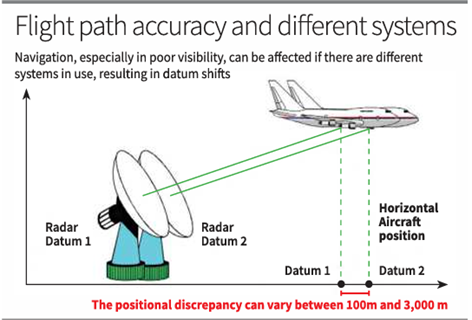
  • The accuracy takes a hit if one uses a different system where the datum shifts.
  • Military aircraft, to avoid enemy interception or identification, tweak the system. Worldwide, it is the WGS 84 which is the base datum. The Indian Air Force uses a system called EVER-MD.
  • Datum shift can result in an error of between 10 metres and 3,000m. a vertical datum is used to measure the elevation or depth relative to a standard origin, such as mean sea level (MSL).

Dig Deeper: What are the recent technological advancements to avoid flight accidents?

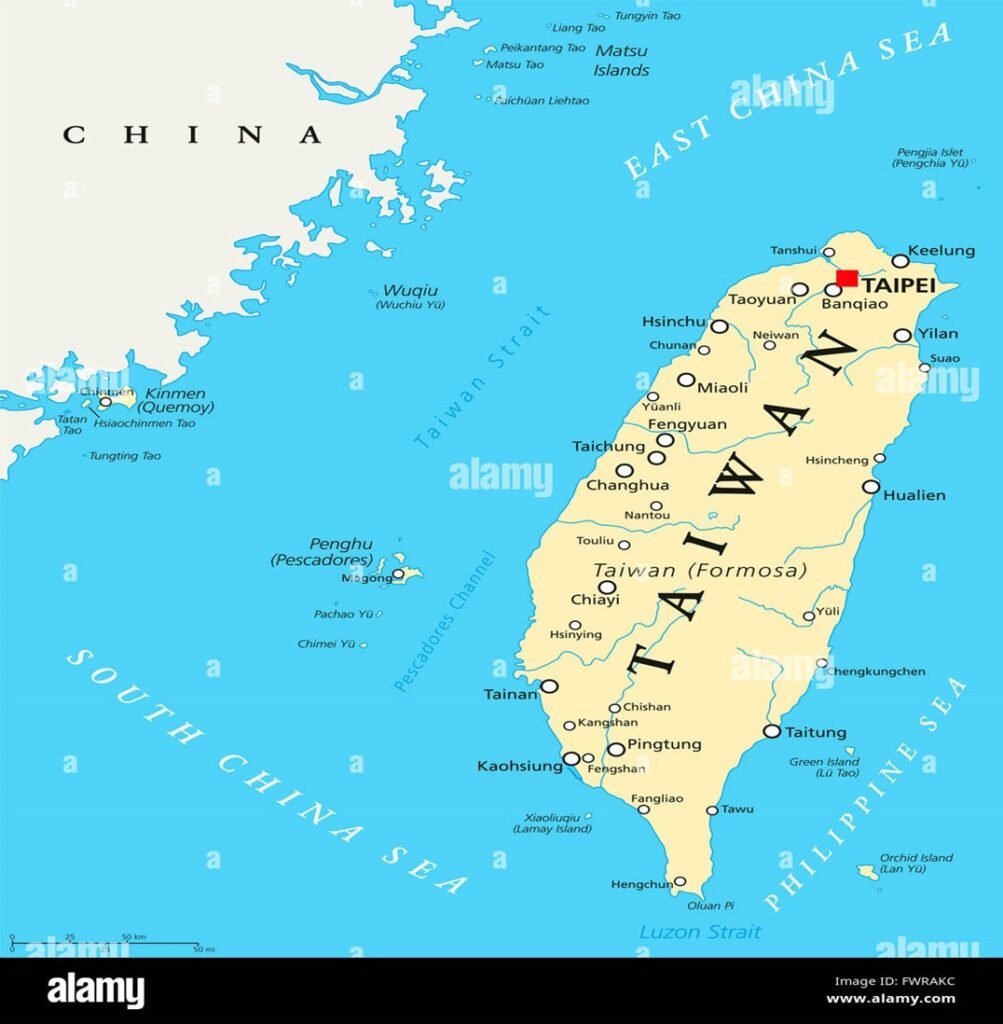
  • Taiwan elected a new President, Lai Ching-te recently.
  • He wants peace with China and urged China to stop its military threats and intimidation of the self-governed island that Beijing claims as its territory.
One China Policy: It is the diplomatic acknowledgement of China’s position that there is only one Chinese government. Under the policy, countries recognise and have formal ties with China rather than the island of Taiwan.One China Principle: The One China principle is the position held by the People’s Republic of China (PRC) and the ruling Chinese Communist Party (CCP) that there is only one sovereign state under the name China, with the PRC serving as the sole legitimate government of that China, and Taiwan is an inalienable part of China.

Beijing views Taiwan as a renegade province and has been upping its threats to annex it by force if necessary.

  • The Republic of China island has a democracy and is determined to defend itself.
  • The new ruling party in Taiwan does not seek independence from China but maintains that Taiwan is already a sovereign nation.
  • 12 nations maintain official diplomatic relations with Taiwan.
  • India does not have formal diplomatic ties with Taiwan yet, as it follows the One-China policy. India has not reiterated support for the One-China policy in a long time.
  • India has an office in Taipei for diplomatic functions — India-Taipei Association (ITA) is headed by a senior diplomat. Taiwan has the Taipei Economic and Cultural Center (TECC) in New Delhi. Both were established in 1995.

Dig Deeper: Read about the strategic importance of Taiwan to the world in the context of Semiconductor manufacturing.

  • The 46th Antarctic Treaty Consultative Meeting (ATCM 46), also known as the Antarctic Parliament is being held in Kochi, Kerala from 20th to 30th of May, 2024.
  • It is being organised by National Centre for Polar and Ocean Research, Goa, under the Ministry of Earth Sciences (MoES).
  • It will be attended by the 56 member countries of the Antarctic Treaty. India had last hosted the ATCM in New Delhi in 2007.

India’s Role in Antarctica –

  • Consultative Party: India, since 1983, participates in all key decision-making processes related to Antarctica.
  • The Antarctic Treaty
    • Original Signatories (1959): Argentina, Australia, Belgium, Chile, France, Japan, New Zealand, Norway, South Africa, USSR, UK, USA.
    • The treaty came into force in 1961 and India joined in 1983, with the present total members being 56.
    • Key Features include –
      • Antarctica designated for peaceful purposes only; no militarisation.
      • Freedom for scientific investigation and mandatory data sharing.
      • Prohibition of nuclear testing and radioactive waste disposal.
    • Today, the treaty forms the basis of all governance and activities in Antarctica, the fifth-largest continent on the planet.
    Indian research stations in Antarctica:
    • Dakshin Gangotri (1983): First Indian station, now decommissioned. It was located in Queen Maud Land. The station operated till 1990.
    • Maitri (1989): Located in Schirmacher Oasis, operational, accommodates 65 people in summer, 25 people in winter.
    • Bharati (2012): Located on Prydz Bay coast, focuses on oceanographic and geologic study, supports 72 in summer, 47 in winter.
  • National Centre for Polar and Ocean Research (NCPOR)
    • It is an autonomous research and development institution in Goa, India, established in 1998 by the Ministry of Earth Sciences to lead India’s research in the polar and Southern Ocean regions.
    • NCPOR’s primary responsibility is to maintain two Indian stations in Antarctica, Maitri and Bharati (established in 1989 and 2011), and the Indian Arctic base ‘Himadri’.
    India is also planning a new station, named Maitri II near the current Maitri to be completed by 2029.

Agenda at ATCM 46 –

  • Global Dialogue: Law, logistics, governance, science, tourism, and other aspects of Antarctica.
  • India’s Focus:
    • Promote peaceful governance in Antarctica.
    • Introduce a working group to regulate tourism to protect Antarctica’s ecosystem.
    • Table the construction plan for Maitri II.
  • Collaborations: Netherlands, Norway, and other European countries to support India’s tourism regulation initiative.

Recent Developments –

  • Antarctic Act (2022): India reaffirmed its commitment to the Antarctic Treaty.
  • Tourism Regulation: New working group to formulate regulations, track tourist activities, and lay down rules to protect Antarctica’s fragile ecosystem.

Dig Deeper: Antarctic Act of 2022 and Himadri station in Arctic region, along with Indian efforts in the Arctic region.

  • Venezuela has likely become the first country in modern history to lose all its glaciers.
  • The Humboldt glacier, which was expected to last another decade has melted faster and has now been reclassified as an ice field.
  • Glaciers are large, thick masses of ice formed on land due to snow accumulation over centuries.
  • Impacts of Glacier Loss
    • Freshwater Source: Glaciers provide crucial freshwater, especially during dry periods. Loss means dependence on rainfall.
    • Aquatic Ecosystems: Cold water runoff from glaciers is vital for species survival. Loss affects these species and the food web.
    • Sea Level Rise: While the Humboldt glacier alone won’t significantly raise sea levels, larger ice sheets like Greenland and Antarctic contribute substantially.
    • Cultural Impact: In Venezuela, glaciers were part of cultural identity and important for tourism and mountaineering.
    Reasons for Glacier Disappearance
    • Global Warming: Primary cause due to greenhouse gases (GHGs) like carbon dioxide and methane.
    • GHG Emissions: Increased drastically since the Industrial Revolution, trapping heat and raising global temperatures by at least 1.1°C since 1880.
    • Regional Impact: Andes mountains, including Venezuela, have seen a high rate of temperature increase (0.10°C per decade).
    They are formed near freezing annual temperatures, significant winter precipitation, and minimal melting in other seasons.

Global Context:

  • Worldwide Glacier Melt: Two-thirds of global glaciers could disappear by 2100 at current climate trends.
  • India’s Risk: Glaciers in the Hindu Kush Himalayan ranges are melting at unprecedented rates and could lose up to 80% of their volume this century without significant GHG emission reductions.

Dig Deeper: Doomsday glacier and other important glaciers