Search
Close this search box.

Birsa Munda, Oleander, India-EFTA Trade Talks, and Marriage Schemes: Today’s Highlights

Table of Contents
  • Catalonia – In the recent regional elections, Spain’s Socialist Party emerged victorious in this Spanish region, marking a decline in the separatist vote. The history of separatism in Catalonia dates back to the mid-19th century, with significant events like the 2015 regional election and the 2017 referendum.
  • Najaf – This city in Iraq is a significant centre of Shia political and religious power. Iran has been seeking to expand its influence over Shia religious authority in Iraq, particularly in Najaf.
  • Baghlan – This province in Afghanistan recently experienced devastating flash floods, resulting in the loss of hundreds of lives and significant property damage.
  • Rafah – Located on the border between Egypt and Gaza, Rafah is crucial during conflicts, such as the recent Israel-Gaza War, serving as a vital corridor for the movement of goods and humanitarian aid.
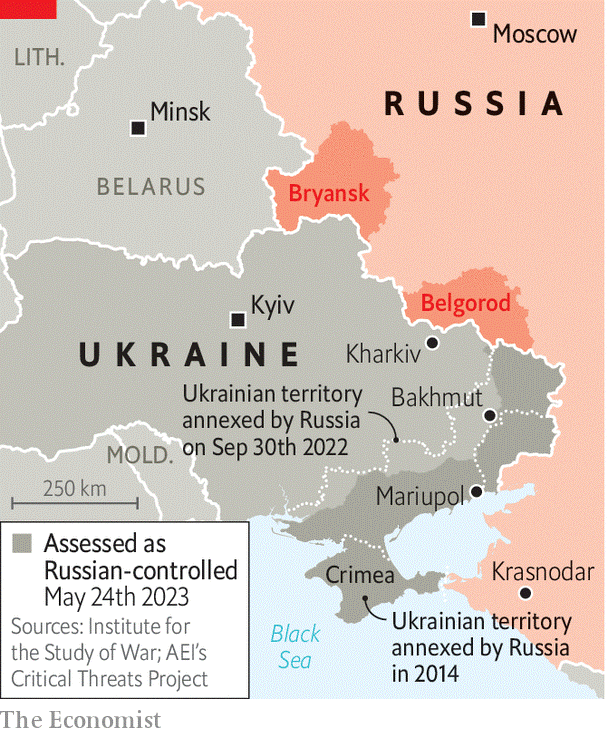
  • Belgorod – This Russian region has come under the spotlight due to recent bombings attributed to Ukrainian forces, reflecting the intensifying war in the border region between Russia and Ukraine.
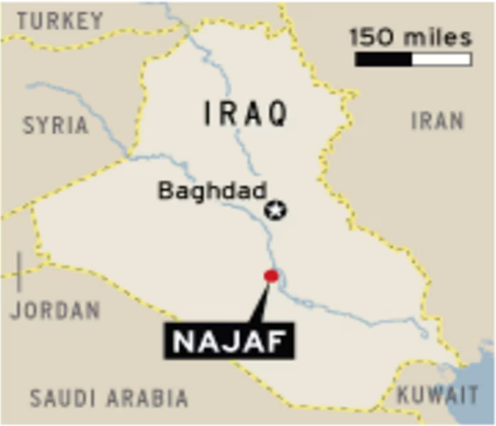
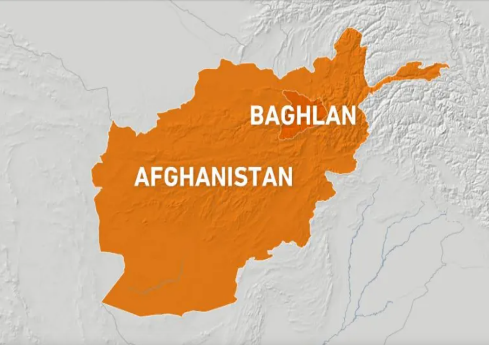
Dig Deeper: Focus on looking for these places on the map and the regions nearby.

  • He was a tribal leader, religious preacher, and folk hero who fought against colonialism and the exploitation of labourers throughout his life.
  • Birsa Munda (1875-1900) was born in Ulihatu, in the forests of Bohonda, in the Chotatanagpur region of Jharkhand. He came from the Munda tribe and was influenced by the Sardari Larai movement
  • His followers included other tribals of the region as well, like the Santhals and Oraons. All of them had grievances against the exploitative colonial rule of the British.
  • Birsa led the Munda rebellion, also known as ‘Ulgulan’ or ‘The Great Tumult’. The rebellion aimed to establish “Munda Raj” and restore the traditional tribal governance system.
  • Birsa initiated a religious movement that encouraged tribals to return to their traditional animistic faith. He blended elements of Christianity and Hinduism into this movement, aiming to revive tribal cultural pride.
  • Birsa’s efforts led to significant changes in the colonial policy towards tribal people. He died under mysterious circumstances in British custody at the age of 25, on June 9, 1900.
  • The Union Cabinet of India approved the celebration of Janjatiya Gaurav Divas on November 15th, the birth anniversary of Birsa Munda, to honour the contributions of tribal freedom fighters.
  • A tribal freedom fighter museum was also recently inaugurated in Ranchi and there has development of new infrastructure in Ulihatu,

Dig Deeper: Tribal movements in colonial India & changes after the Munda rebellion

  • Nerium oleander, commonly known as oleander or rosebay, is widely cultivated for ornamental and landscaping purposes across tropical, subtropical, and temperate regions due to its drought tolerance.
  • Two Kerala government-controlled temple boards, which together manage 2,500-odd temples in the state, have banned use of oleander flowers in temple offerings after a 24-year-old woman died after accidentally chewing some oleander leaves.
  • In Kerala, it is known as arali and kanaveeram and is used as natural fencing along highways and beaches. The plant is available in various varieties, each distinguished by the color of its flowers.
  • The Ayurvedic Pharmacopoeia of India (API) recognizes the medicinal value of oleander. It notes that oil derived from the root bark of oleander is beneficial for treating skin diseases.
  • Classical Ayurvedic texts like Charak Samhita recommend the leaves of the white flowered variety for severe skin conditions, including leprosy. Furthermore, Bhavaprakasha categorizes oleander (Karvira) as a poison but suggests its use in treating conditions such as infected wounds and skin diseases.
  • Despite its medicinal applications, the toxicity of oleander is well-documented. The plant contains cardiac glycosides like oleandrin, folinerin, and digitoxigenin, which can be dangerous.
  • These compounds affect the cardiac muscle, enhancing heart contractions but also posing significant risks of overdose and toxicity.
  • Symptoms of oleander poisoning include nausea, diarrhoea, vomiting, skin rashes, confusion, dizziness, and irregular heart rhythms, which can be fatal in extreme cases.

Dig Deeper: Traditional medicine systems in India

European Free Trade Association:
It is an intergovernmental organization that promotes free trade and economic integration between its four member states –Iceland LiechtensteinNorwaySwitzerlandEFTA was founded on January 4, 1960 by 7 countries: Austria, Denmark, Norway, Portugal, Sweden, Switzerland, and the UK. Iceland joined in 1970, Finland in 1986, and Liechtenstein in 1991. The UK left the EFTA in 1973 when it joined the EC, which later became the EU.
  • On March 10, 2024, India signed a Trade and Economic Partnership Agreement (TEPA) with the EFTA.
  • Distinguished from previous agreements with nations like Australia, the UAE, and Mauritius, the India-EFTA deal incorporates environmental and labour issues, aligning with global trade standards which India has traditionally resisted.
  • Moreover, it features a detailed investment chapter focused on investment facilitation rather than protection.
  • A unique aspect of this FTA is the inclusion of specific obligations of conduct rather than results where EFTA countries have committed to a target of investing $50 billion within the first ten years, and another $50 billion over the following five years, along with facilitating the creation of one million jobs in India.
  • These are goals EFTA countries will strive towards, without a binding requirement to achieve them. This agreement is a shift from India’s recent trade strategy, which had seen a separation of trade and investment agreements, as demonstrated by separate agreements with the UAE and discussions with the U.K.

Dig Deeper: India’s Free Trade Agreements with various countries & issues at WTO

  • Recent Supreme Court judgment in Dolly Rani v Manish Kumar Chanchal case mentioned that if no saptapadi ceremony is performed, a Hindu marriage between two people cannot be considered valid.
  • Section 7(1) of the Hindu Marriage Act says that a Hindu marriage be solemnised in accordance with the customary rites and ceremonies of either party.
  • Saptapadi is a custom among certain sections of Hindus; it is not universally practised among all denominations.
  • The Section 7(2) of the Act says that ‘Where such rites and ceremonies include the Saptapadi, the marriage becomes complete and binding when the seventh step is taken.’
  • The Hindu Marriage Act cannot solemnise a marriage through registration alone. Registration is now mandatory in many States, and it is done after a ceremony of marriage is conducted.
  • Tamil Nadu passed an amendment in 1967 simplifying marriage ceremonies. This was the Suyamariyathai, or “self-respect” marriage, which is a Hindu marriage that does not require a Brahmin priest, holy fire, or saptapadi.
  • In a Suyamariyathai marriage, the couple can declare their marriage in the presence of friends, relatives, or other people. However, such marriages must still be registered in accordance with the law to be valid and legally binding.
Saptapadi:
Saptapadi is a Hindu wedding ceremony where the bride and groom walk seven steps in a clockwise direction around a sacred fire (Agni) near the Mandap. Each step, called a Phere, represents one of the seven promises the couple makes to each other during the exchange of vows.

Dig Deeper: Read about Hindu Marriage Act and Special Marriage Act