Search
Close this search box.

India’s Demographic Journey: Hits, Misses and Sustainability, SC on caste-based segregation in prison, Cadavers Donations

Table of Contents

(General Studies I – Society Section – Role of Women and Women’s Organization, Population and Associated Issues, Poverty and Developmental issues, Urbanization, their problems and their remedies.)

  • It is said that “Demography is destiny”, on the observance of World Poulation Day on July 11. It becomes important to look at India’s demographic journey. Demographics refer to statistical data relating to the population in a region.
  • This covers various factors like population growth rate, the percentage of different age groups within the population, the literacy rates, the sex ratio, urban-rural population ratios, etc.

India’s Population Dynamics

  • Fertility, mortality and migration are the three components which plays major role in shaping demographic landscape. India has done outstanding job in reducing its Fertility.
  •  According to National Family Health Survey-5 India’s total fertility stands at 2.1 in 2021 from the 3.4 in 1992. This number is below replacement levels.
  • Demographic profile of India: Age wise
  • India’s life expectancy is also increasing
  • Mortality rates decreased hence, ageing population
  • According to Census 2011 the population above 60 years was 8.6%, but it is expected to rise to 19.5 % by 2050.

Factors Triggered Demographic Transition in India?

  • Rapid Economic Development: Economic growth leads to improved living standards, better healthcare facilities, and increased access to education, which collectively contribute to lower fertility rates.
  • Reduction in Infant and Child Mortality Rates: Lower mortality rates among infants and children have reduced the need for families to have a large number of children for old-age support.
  • Rise in Women’s Education and Work Participation Rates: Increased education and participation of women in the workforce have also played a crucial role.

Demographic Transition and Sustainability

Development in simple terms is defined as the basic requirements of food, shelter and health for all. ‘No poverty, zero hunger and Good Health’ which forms the core of sustainable development goals (SDG) 2030.

  • Hits:
  • India made great leap towards eradicating poverty from 48% to 10 % between 1990 and 2019. MNREGA and Janani Suraksha Yojna played crucial role.
  • India defied all the western think tanks who questioned it’s ability to feed it’s population. India came up with Green Revolution and became self sufficient.
  • The portion of population suffering from hunger reduced from 18.3% to 16.6% between 2001 and 2021.
  • To eradicate malnutrition, it came with POSHAN ABHIYAN.
  • The Maternal Mortality Rates [ from 384.4 in 2000 to 102 in 2020] and Infant Mortality [ from 66.7 per 1000 in 2000 to 25.5 per 1000 in 2021] has strictly declined.
  • Misses:
  • Inequality among its population, according to OXFAM 10 % Indians hold 70% of its wealth.
  • Inequitable distribution of development among regions.
  • Stunting, wasting and underweight is still a wide scaling problem.
  • Double burden of communicable and non communicable disease.

Harnessing Dividend and Achieving Sustainability

  • To achieve the SDGs India must have to acknowledge its changing population Dynamics.
  • Addressing Inequality among its population.
  • Providing economic opportunities for the young mass.
  • Better health care facility keeping elderly and Infant population in mind.
  • Gender Equality and empowering women would be right step.

India still has a long journey to travel in Achieving its Sustainability targets. We need multi sectorial and collaborative approach with political will. India must have to address issues related to demographic transition and its dynamics for proper policy formulation and their implementation.
  • The Supreme Court ruled that divorced Muslim women are entitled to maintenance under the secular Section 125 of the Code of Criminal Procedure (CrPC).
  • The court concurred with amicus curiae that the remedy under Section 125 CrPC cannot be denied to divorced Muslim women despite the enactment of the Muslim Women (Protection of Rights on Divorce) Act, 1986.
AspectSection 125 CrPCMuslim Women (Protection of Rights on Divorce) Act, 1986
ApplicabilityThis applies to all divorced women regardless of faithThis applies specifically to divorced Muslim women
Maintenance PeriodMandates monthly maintenance until remarriageMaintenance provision only during the iddat period
Children’s MaintenanceRequires payment until children reach maturity age.Liability limited to two years from birth
Remarriage ClauseEntitled if not remarriedMaintenance stops after the iddat period
Court’s InterpretationEnsure a life of dignity for all divorced women, a secular remedy that cannot be deniedProvide fair and reasonable maintenance during a specified period, It does not extinguish the right to seek maintenance under Section 125
Legal RecourseOpen to divorced women to seek supportChoice given to Muslim women to apply under this Act or Section 125
  • The table below captures the key differences and judicial interpretations between Section 125 CrPC and the Muslim Women (Protection of Rights on Divorce) Act, 1986, as outlined by the Supreme Court ruling.

Dig Deeper: Read about the Iddat period and recent reforms brought by the government in the Muslim Women Act.

  • The Supreme Court indicated its intention to ask the Union Home Ministry to intervene with States to overhaul prison manuals and eliminate existing caste-based discrimination practices among prisoners.
State Subject
‘Prisons’/’persons detained therein’ is a “State-List” subject under Entry 4 of List II of the Seventh Schedule to the Constitution of India.
Administration and management of prisons and prisoners is the responsibility of respective State Governments who are competent to take appropriate action in this regard.
However, given the significance of prisons in the Criminal Justice System, the Ministry of Home Affairs has been providing regular guidance and support on diverse issues relating to prison administration.
  • Despite denials from States like Uttar Pradesh, the court read from prison documents using terms such as “scavenger class.
  • One document noted that convicts serving simple imprisonment wouldn’t perform menial duties unless they belonged to a class “accustomed” to such work.
  • In Madhya Pradesh, convicts from denotified tribes are automatically viewed as habitual criminals.
  • Earlier the court found that prison manuals in over 10 States, including Uttar Pradesh, West Bengal, Odisha, Maharashtra, Tamil Nadu, and Kerala, still contained provisions sanctioning caste-based discrimination and forced labour in prisons.
  • Caste discrimination persists inside prisons, with labour segregated by caste.
  • Modern reforms have not penetrated prison walls, with Dalits even having separate wards.
  • The Rajasthan Prison Rules, 1951, assigned Mehtars to latrines while Brahmins were assigned to kitchens.
  • In Tamil Nadu, Thevars, Nadars, and Pallars were allotted different sections in Palayamkottai Central Jail, exemplifying caste-based segregation of barracks.
  • The court emphasized the need to repeal these discriminatory provisions in prison manuals.

Dig Deeper: Read about the Model Prison Manual, 2016 in the context of recent reforms in Criminal Administration and Bhartiya Nyaya Sanhita.

  • The Union Home Ministry cancelled the Foreign Contribution Regulation Act (FCRA) registration of the parent entity of the Centre for Financial Accountability (CFA).
  • The CFA critically analyses the role of financial institutions and their impact on development, human rights, and the environment.

Foreign Contribution Regulation Act:

  • It is compulsory to register under the Act, first enacted in 1976, if an association, group or NGO intends to receive foreign donations.
  • The 1976 Act was repealed and replaced with a new legislation in 2010. It was further amended in 2020.
  • The registration is valid for five years, after which the NGO has to apply for a renewal.
  • Registered groups can receive foreign contributions for social, educational, religious, economic and cultural programmes.
  • Publishing of current affairs programmes using foreign funds is prohibited under Section 3 of the FCRA.
  • Recently, the CFA reported that additional projects in a Special Economic Zone operated by the Adani Group in Gujarat’s Kutch region would increase environmental hazards and health risks, further polluting and degrading the ecology.
  • In December 2023, the CFA organized an online meeting with the All-India Bank Officers Confederation to discuss public sector banks’ issues.
  • CFA was informed online about the FCRA registration cancellation due to incorrect filings for financial years 2018 and 2019.
  • CFA to continue their work through innovative means, including domestic donations.
  • The Ministry also cancelled the FCRA registration of the Centre for Policy Research (CPR).
  • Since 2015, over 16,000 NGOs have had their FCRA registrations cancelled for violations.
  • As of now, 15,946 FCRA-registered NGOs remain active.

Dig Deeper: Read about banking rules and regulations to receive foreign funds for NGOs registered under FCRA.

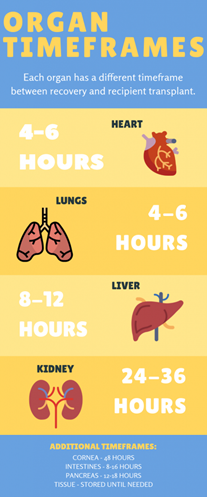
  • Amid a shortage of cadavers for academic and research purposes at medical colleges, the Union Health Ministry has appealed to States and Union Territories to encourage body donations in cases of deaths occurring outside hospitals.
  • The Director-General of Health Services noted that while the government is committed to promoting organ donation to save lives, organ donations are typically feasible only from patients certified as brain stem dead before the heart stops.
  • However, this is often not possible when deaths occur outside hospitals, during cardiac events before ICU admission, or before brain stem death certification is complete.
  • In such cases, and for deaths at home, body donation remains possible.
  • There is currently a shortage of human cadavers for teaching.
  • State Health Secretaries are urged to inform stakeholders about this option and encourage and facilitate body donations from family members when organ donation is not possible.
  • This will help address the cadaver shortage in medical institutions.
  • Additionally, the Health Ministry announced a public awareness campaign, Angdaan Jan Jagrukta Abhiyaan, as part of Indian Organ Donation Day on August 3.
  • One organ donor can save up to eight or nine lives.

Dig Deeper: Read about the National Organ and Tissue Transplant Organisation (NOTTO)

  • The Borehole Geophysics Research Laboratory (BGRL) in Karad, Maharashtra, under the Ministry of Earth Sciences, leads India’s deep-drilling program.
  • BGRL is a specialised institute mandated to execute India’s scientific deep-drilling programme.
  • The aim is to drill to a depth of 6 km to study reservoir-triggered earthquakes in the Koyna-Warna region, which has experienced frequent earthquakes since the impoundment of the Koyna Dam in 1962.

The Koyna borehole

  • It uses a hybrid of mud rotary drilling and air hammering, with the technique chosen based on rock type and drilling conditions.
  • Mud rotary drilling uses a diamond-embedded drill bit cooled and lubricated by drilling mud, which also removes rock cuttings.
  • Air hammering uses compressed air to deepen the borehole and flush out cuttings.
  • These methods enable the collection of core samples and rock chips for detailed study.
  • A 3-km deep pilot borehole in Koyna is complete, and the Ministry plans to extend it to 6 km.
  • Scientists currently lack the means to predict the exact timing and location of earthquakes.
  • Major earthquakes, measuring over 7.5 on the Richter scale at tectonic plate boundaries, are associated with severe infrastructure damage and loss of life, and can trigger tsunamis.
  • However, smaller earthquakes occurring within tectonic plates are harder to predict and can impact densely populated areas unexpectedly.
  • The anticipated temperature at 6 km depth will inform the design of drilling equipment and sensors.
  • Ongoing research on the Koyna samples by over 20 groups nationwide includes studies on rock frictional properties and microbial life in extreme environments.
  • International researchers are also interested in these samples for projects like carbon capture and storage.

Scientific Finding

  • The pilot borehole revealed significant geological information, including 65-million-year-old Deccan trap lava flows and 2,500-2,700-million-year-old granitic basement rocks.
  • Downhole measurements provided new data on rock properties, fluid and gas compositions, temperature, stress regimes, and fracture orientations.
  • High-resolution images of the borehole wall and hydraulic fracturing experiments offered insights into the stress regimes and fault properties.

Dig Deeper: Read about the Kola Superdeep Borehole.