Search
Close this search box.

Sacred Flowers of Jagannath, Somnathpuram, Financial Action Task Force (FATF)

Table of Contents

Surya Tilak Project at Ram Temple in Ayodhya

It aims to direct sunlight onto the forehead of the idol on Ram Navami annually.

The setting up of the necessary equipment was done by scientists and engineers at two government-funded organisations, the Indian Institute of Astrophysics (IIA) in Bengaluru and the Central Building Research Institute, Roorkee.

The Lucknow-based National Botanical Research Institute (NBRI), a Council of Scientific and Industrial Research (CSIR) institution, is reviving endangered flower species used in the 12th-century Shree Jagannath Temple in Puri, Odisha.
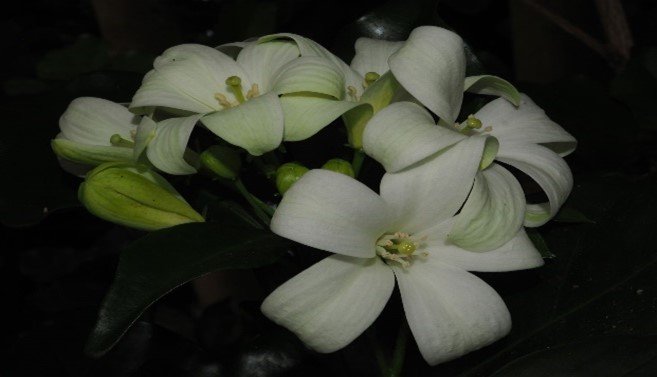
  • NBRI has supplied Maurya and Davana (Dayana) flower species to the temple.
  • The Shree Jagannath Temple involves the extensive use of flowers and leaves for specific rituals.
  • Quality planting materials of Marigold, Tuberose, Tulsi, Jasmine, and Davana (Dayana) have been supplied and introduced in the temple’s Matitota garden for worship purposes.
  • Gardeners are periodically trained in agro-practices for raising these plants.
  • Additionally, the Namoh 108 variety of lotus, released by CSIR-NBRI, was introduced in the Koili Baikuntha garden of the temple.
  • These aromatic flowers and foliage plants are in high demand for daily rituals.

Dig Deeper: Read about the toxicity caused by temple flowers (Oleander) in South India

  • The Karnataka plans to promote the UNESCO World Heritage Site of Somanathapur as part of the Mysuru tourism circuit before Dasara.
  • The Belur, Halebid, and Somanathapura temples are set to be nominated for UNESCO World Heritage Site status.
  • The Keshava temple at Somanathapura is described as “poetry in stone” under the Sacred Ensembles of the Hoysalas.
  • The State Archaeology Department has partnered with the Indian National Trust for Art and Cultural Heritage (INTACH) for the preservation of this archaeological heritage.

Dig Deeper: What style of temple architecture is used in the Hoysala temples?

  • India criticised the U.S. State Department’s 2023 report on International Religious Freedom as deeply biased and a one-sided projection of issues.
  • Report questioned the integrity of certain legal judgments of Indian courts.
  • The report dedicated nearly 69 pages to religious freedom in India, elaborating on the apparent collaboration between law enforcement agencies and majoritarian groups, and flagged issues like the campaign for a Uniform Civil Code (UCC) and the push for creating a “Hindu Rashtra.”
  • The Christian community reported conversion accusations or reported mob attacks and arrests of community members on conversion charges.

Dig Deeper: Read about the U.S. Commission on International Religious Freedom (USCIRF).

  • Researchers from India, London, and Africa in a paper published in the Lancet Diabetes and Endocrinology propose replacing the oral glucose tolerance test (OGTT) with an HbA1c test for detecting gestational diabetes in early pregnancy.
  • The HbA1c test, which can be used at the point of care, offers a simpler screening method, allowing early intervention for those at the highest risk and reducing the need for OGTTs.
  • The study used data from the STRiDE cohort study in south India and western Kenya, and the PRiDE cohort in the U.K.
  • A health worker can use a point-of-care testing kit to test HbA1c levels with just a drop of blood at the patient’s home.

Dig Deeper: Read the basic concept of basic blood sugar, insulin and test of HbA1c.

Financial Action Task Force (FATF)

  • The Financial Action Task Force (FATF), established in 1989 by the G7, is an intergovernmental organization focused on combating money laundering, terrorist financing, and related threats.
  • It sets international standards, monitors compliance and issues guidelines to ensure effective anti-money laundering (AML) and counter-terrorist financing (CTF) measures.
  • India has achieved an outstanding outcome in the 2023-24 mutual evaluation conducted by the Financial Action Task Force (FATF).
  • The Mutual Evaluation Report of India, adopted at the FATF plenary places India in the regular follow-up category, a distinction shared by only four other G-20 countries.
  • This marks a significant milestone in the nation’s efforts to combat money laundering (ML) and terrorist financing (TF).
  • The FATF stated that India had reached a high level of technical compliance with its requirements.
  • The country’s anti-money laundering (AML), countering the financing of terrorism (CFT), and counter-proliferation financing (CPF) regimes are achieving good results, including international cooperation, access to beneficial ownership information, use of financial intelligence, and depriving criminals of their assets.

Dig Deeper: Read about the Prevention of Money Laundering Act provisions and the Grey list of FATF.