
About Great Nicobar
- Great Nicobar, the southernmost tip of India, is part of the Andaman and Nicobar archipelago comprising around 600 islands.
- It is the largest of the Nicobar Islands, characterized by lush rainforests, diverse wildlife, and a unique ecosystem.
- The island is home to the Shompen and Nicobarese tribal communities.
- The Shompen, around 250 individuals, are hunter-gatherers living in the interior forests.
- The Nicobarese, about 1,300 in total, practice farming and fishing.
- The island also hosts around 6,000 settlers from mainland India.
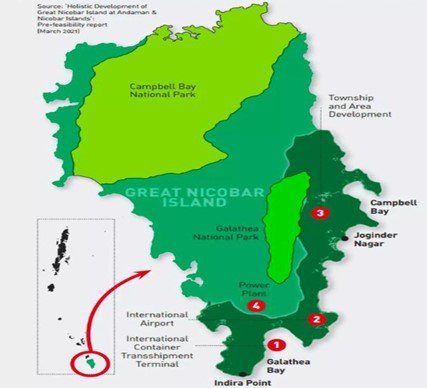
- The opposition has demanded an immediate suspension of all clearances for NITI Aayog’s mega project on Great Nicobar Island.
- In March 2021, NITI Aayog unveiled a ₹72,000 crore plan for the holistic development of Great Nicobar Island, including an international trans-shipment terminal, an international airport, a power plant, and a township.
- The project aims to integrate Great Nicobar into the regional and global maritime economy and promote sustainable tourism.
- Concerns associated with the project:
- Great Nicobar Project will cut around 1 million trees for infrastructure development on Great Nicobar Island.
- It requires the diversion of 130 sq km of forest land.
- Compensatory afforestation will occur in Haryana due to limited plantation scope in the Andaman and Nicobar Islands, a decision criticized by environmentalists.
- The Tribal Council of Great Nicobar and Little Nicobar have voiced their opposition.
- The trans-shipment terminal is planned for Galathea Bay, a crucial nesting site for the endangered giant leatherback turtle.
- The project also threatens the ancestral lands of the Great Nicobarese and poses health risks to the Shompen due to their lack of immunity to common diseases.
- The local panchayat of Campbell Bay and disaster management researchers have raised concerns over the social impact assessment process for land acquisition and the failure to adequately assess earthquake risks in this seismically active region.
Dig Deeper: Locate important choke points of Indo-Pacific Trade routes on the map.
