Search
Close this search box.

Railway Accidents, Organ Donation Advisory, Blood Test for Breast Cancer Diagnosis

Table of Contents
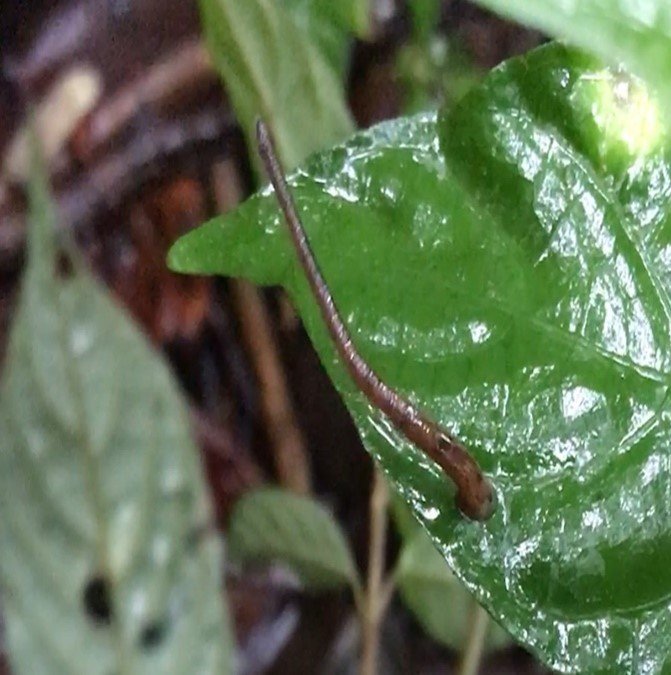
  • A new study published in the journal Biotropica says at least one species of terrestrial leech can jump.
  • Researchers at Fordham University recorded footage during expeditions to Madagascar in 2017 and 2023.
  • The footage shows leeches from the genus Chtonobdella coiling back on a leaf and then launching themselves, resembling a “back bending cobra” or a spring being pulled back. This motion contrasts with their usual inchworm-like movements.
  • Paper identified the jumping leech as Chtonobdella fallax, a common species in Madagascar.
  • Other worm-like invertebrates, such as legless larvae of gall midges, Mediterranean fruit flies, “skipper flies,” and several caterpillars, including Lymantria monachal and Orgyia leucostigma, can also jump.
  • Although naturalists and leech biologists have long debated the ability of terrestrial leeches in the family Haemadipsidae to jump, there has been little concrete evidence until now.
  • Understanding leech behaviour is crucial for conservation efforts, as leeches and their blood meals are increasingly used to survey vertebrate biodiversity.

Dig Deeper: Read about species under phylum Annelida.

  • A train accident killed 10 people in West Bengal, a statutory inquiry has been ordered.
  • Prima facie signal failure was the cause behind two trains being on one track.
  • Operating a train requires coordination among multiple personnel, including station masters, section controllers, signal staff, and gatemen.
  • During signal failures, trains operate under caution with specific procedures, including issuing a TA-912 notice and a ‘line clear’ ticket. Only one train should be in a block section at any given time.
  • The anti-collision device Kavach was not installed on this route. Kavach could have slowed down the freight train automatically. Implementation of Kavach has been slow, with only 1,500 km equipped out of nearly 68,000 km of railway network.
  • Human failure is a major cause of accidents.
  • Committees have recommended creating an independent Railway Safety Authority to oversee operations.
  • In the Analysis Report by High-Level Safety Review Committee (2017), a chief signal engineer noted in the report that only 3% of accidents in Indian Railways are due to “failure of equipment.”

Dig Deeper: Read about Anil Kakodkar committee recommendations to improve safety like the adoption of an Advanced Signalling System (akin to the European Train Control System) and Technology solutions for modernising the Railway in India.

Perumbalai

  • Perumbalai is located on the bank of the Nagavathi (ancient Palar), a tributary of the Cauvery River.
  • Kongumandala Satakam, a 13th Century literary work by Karmegakavirayar of Vijayamangalam, referred to Perumbalai as the northern boundary of the Kongu region, comprising present-day Coimbatore, Erode, Tiruppur and parts of Dharmapuri and Salem.
  • The Tamil Nadu government’s Department of Archaeology conducted excavations at Perumbalai in Dharmapuri district.
  • Graffiti resembling geometric symbols was found among the potsherds discovered.
  • The report titled “Excavations at Perumbalai 2022” was published by the Department of Archaeology.
  • According to AMS (Accelerator Mass spectrometry) dates, the site’s lowest level dates back to the 6th Century BCE.
  • Tamil-Brahmi inscribed potsherds and graffiti-bearing potsherds have been found at other early historic sites such as Vallam, Kodumanal, Keeladi, Uraiyur, and Karur.
  • Pottery Assemblage:
  • The pottery found demonstrates a proper chronological sequence.
  • The lower-most level yielded thin pottery, primarily fine Black and Red Ware (BRW) and black ware.
  • The clay used was fine and well-levigated, indicative of the Iron Age.
  • Swastik-like symbols were found on potsherds, also many with recognizable signs.
  • Various types of pottery were unearthed, including burnished, black and red, russet-coated black and red, and red ware. Russet-coated ware served as elite tableware.
  • Antiquities:
  • The excavations yielded terracotta objects representing human and bird figurines, beads, wheels, sling balls, spindle whorls, lamps, and hopscotches.
  • An unidentified copper coin and a copper bell were also found.

Dig Deeper: Read about the features of the Iron Age and compare them with the Sangam Period.

  • The Indian Space Research Organisation (ISRO) completed the third reusable launch vehicle landing experiment (RLV LEX) at the Aeronautical Test Range in Chitradurga, Karnataka.
  • Following the success of RLV LEX-01 and LEX-02, RLV LEX-03 re-demonstrated the autonomous landing capability under more challenging release conditions and severe wind conditions.
  • The winged vehicle, Pushpak, was released from an Indian Air Force Chinook helicopter at an altitude of 4.5 km.

Technical Specification

  • Due to its low lift-to-drag ratio aerodynamic configuration, the landing velocity exceeded 320 km/h, compared to 260 km/h for a commercial aircraft and 280 km/h for a typical fighter aircraft.
  • After touchdown, the vehicle’s velocity was reduced to nearly 100 km/h using a brake parachute, followed by landing gear brakes for deceleration.
  • During the ground roll phase, Pushpak utilized its rudder and nose-wheel steering system to maintain a stable and precise ground roll along the runway.
  • Pushpak autonomously executed cross-range correction manoeuvres, approached the runway, and performed a precise horizontal landing at the runway centre line.
  • The mission simulated the approach and landing interface and high-speed landing conditions for a vehicle returning from space, reaffirming ISRO’s expertise in critical technologies required for RLV development.
  • The advanced guidance algorithm for longitudinal and lateral plane error corrections essential for future Orbital Re-entry Missions was validated.
  • The mission used sensors such as an inertial sensor, radar altimeter, flush air data system, and NavIC.

ISRO’s ongoing joint initiative

  • ISRO and NASA are realizing a joint satellite mission called NISAR (NASA ISRO Synthetic Aperture Radar) for earth science studies.
  • As part of the Indo-French cooperation, ISRO and CNES have completed the feasibility study on realizing an earth observation satellite mission with a thermal infrared imager, named as TRISHNA.
  • ISRO and JAXA scientists are conducting the feasibility study to realize a joint satellite mission to explore the moon’s polar region.
  • Notably, the LEX-03 mission reused the winged body and flight systems from the LEX-02 mission without any modification, demonstrating ISRO’s robust design for reusability.

Dig Deeper: Read about the Gaganyan Mission and US cooperation in this.

  • With an increasing number of foreigners visiting India for organ transplantation, the Union Health and Family Welfare Ministry has issued an advisory.

The National Organ and Tissue Transplant Organisation (NOTTO)

  • Established under the Transplantation of Human Organs and Tissues Act (THOTA), 1994, is an apex organisation to provide an efficient and organised system of organ procurement and distribution in the country and maintains a national registry of donors and recipients of organs and tissues.
  • The Health Ministry has prepared protocols and guidelines for publication on the Bureau of Immigration’s website and has requested the External Affairs Ministry to circulate these guidelines at airports.
  • Key requirements include the necessity of a medical visa for organ transplant treatments and that all living donors must be 18 or older.
  • According to the Transplantation of Human Organs and Tissues Act of 1994, an Indian donor cannot donate organs to a foreigner unless they are a near relative, which includes spouses, children, parents, siblings, and grandparents.
  • Certification of the relationship by a senior official of the donor’s embassy in India is required.

Dig Deeper: What is Transplant Rejection?

  • Scientists at the CSIR Centre for Cellular and Molecular Biology (CCMB), in collaboration with the Regional Cancer Centre (RCC) in Thiruvananthapuram, have developed a cost-effective, non-invasive method to detect breast cancer using a drop of blood.
  • By analysing microRNA (miRNA) signatures in cancer samples, they identified miRNAs associated with invasive breast cancer, with some serving as potential biomarkers for different types, grades, and stages of invasive ductal carcinoma.
  • MiRNAs are small non-coding RNA molecules, that regulate most cellular processes.
  • Identifying miRNAs involved in breast cancer initiation and progression promises advancements in early diagnosis and prognosis.
  • Cancer cells shed circulating nucleic acids (CNAs), including DNA, RNA, and proteins, detectable in plasma or body fluids. This principle could lead to a liquid biopsy system for cancer detection from a single blood drop, benefiting developing countries.
  • The study paves the way for miRNAs as biomarkers, offering a refined, cost-effective, and non-invasive breast cancer diagnostic method.
  • Nine international patents have been granted for these biomarkers, highlighting the study’s impact, recently published in Cell Communication and Signalling.

Dig Deeper: Read about cancer statistics and major cancer prevalent types among women and men.