
Search
Close this search box.

Ele-fence, Russia-North Korea Security Agreement, EVM Burnt Memory

Table of Contents
  • Kerala’s Wayanad is installing the country’s first AI-based smart fence, ‘Ele-fence’, to mitigate human-wildlife conflict.
  • The pilot project, implemented by White Elephant Technologies with the support of the Kerala Forest Department, is located in the Chethalth forest range of the south Wayanad forest division.
  • The 70-metre Ele-fence combines surveillance, real-time monitoring, control, and preventive features.
  • The design includes a detailed study of elephant behaviour in conflict situations.
  • The fence comprises six-inch-wide steel girders, each 17 feet high, concreted at four feet depth, and welded with steel bars for strength.
  • AI-based logical trip wires enable early warning of elephant movements. 4K cameras provide real-time video and audio to the Forest Department‘s control rooms and Rapid Response Teams (RRTs).
  • Sound and alarm lights deter elephants from approaching and alert pedestrians and motorists.
  • The Ele-fence employs lasher belt technology to prevent elephants from breaching it.
  • Cameras capture live visuals when elephants approach within 50 to 60 meters, triggering alarms to warn locals. The real-time video alerts the nearest RRT and the central forest control room.

Dig Deeper: Read about Beehive fences as an ecological solution to ward off Elephants
  • A day, after a trial court granted bail to the Delhi Chief Minister, who is jailed under the Prevention of Money Laundering Act (PMLA), the Delhi High Court, stayed the order as the trial court failed to apply the ‘twin test’ required under PMLA for granting bail.
  • Twin Test and Section 45 of PMLA

Section 45 of the PMLA mandates that bail can only be granted if two conditions are met:

  1. There are reasonable grounds to believe the accused is not guilty;
  2. The accused is not likely to commit any offence while on bail.

Supreme Court on Twin Test

  • In 2017, the Supreme Court in Nikesh Tarachand Shah v Union of India ruled the twin test unconstitutional due to unreasonable classification, but the Finance Act of 2018 reinstated these provisions, leading to further legal challenges.
  • In 2022, the Supreme Court upheld the re-insertion of the twin test in Vijay Madanlal Choudhary v Union of India, rejecting the previous ruling.
  • Although the Supreme Court has agreed to review the Vijay Madanlal Choudhary ruling, it remains a valid law as no stay is in place.
  1. The public prosecutor must be heard in all bail applications, and if the prosecutor opposes bail, the court must apply the twin test.
  2. Similar provisions exist in other laws dealing with serious offences, such as the Drugs and Cosmetics Act, the Narcotic Drugs and Psychotropic Substances Act, and the Unlawful Activities Prevention Act.
  3. The twin test must be rigorously applied by all courts for both regular and anticipatory bail.
  4. An accused can benefit from Section 436A of the Code of Criminal Procedure (CrPC), which allows bail after serving half of the maximum sentence as an undertrial.
  5. This means that in most money laundering cases if the trial is not completed within three and a half years, the accused is entitled to bail regardless of the twin test.

Dig Deeper:  Read about the contentious provisions of the Prevention of Money Laundering Act.

  • The Public Examinations (Prevention of Unfair Means) Act, 2024, effective from June 21, 2024, imposes up to five years of imprisonment and fines up to ₹1 crore for malpractices and organized cheating in government recruitment exams.
  • The Act, passed by Parliament in February, details various offences and their punishments:
  • Offenses include:
  • Leakage of question papers or answer keys
  • Unauthorized assistance to candidates
  • Tampering with computer networks, resources, or systems
  • Creation of fake websites for cheating or monetary gain
  • Conduct of fake examinations, issuance of fake admit cards or offer letters
  • Manipulation of seating arrangements, dates, and shifts to facilitate unfair means
  • Punishments:
  • Individuals involved face imprisonment of 3 to 5 years and fines up to ₹10 lakh.
  • Service providers engaged by public examination authorities may be fined up to ₹1 crore, and the costs of the examination will be recovered from them.
  • Such service providers will be barred from conducting public examinations for four years.
  • The UGC-NET 2024 examination is cancelled and under investigation by the CBI, and will not be covered by this Act.

Dig Deeper: Read about the mandate of the NTA and the list of national examinations under it and compare it with UPSC.

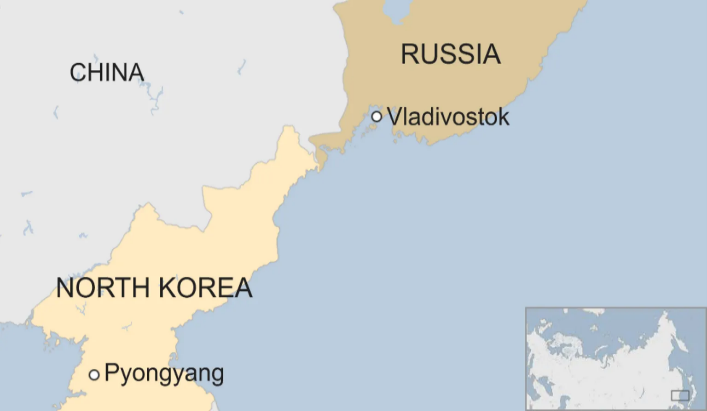
  • The “Treaty on the Comprehensive Strategic Partnership” between DPRK and Russia includes military and other assistance if either party is involved in a war, aligning with Article 51 of the U.N. charter.
  • It aims to build a “just and multipolar new world order,” strengthen defence capabilities, and address food shortages in DPRK.
  • North Korea supports Russia’s invasion of Ukraine, recognizing Donetsk and Luhansk as independent states in 2022.
  • The U.S. and South Korea allege DPRK supplies Russia with military equipment for use in Ukraine.
  • Increased rail traffic between Russia and DPRK post-summit suggests arms supply, though both deny this.
  • Experts believe North Korea trades arms for high-tech military technologies from Russia.
  • Russia, facing revenue losses from European trade cuts, supplies energy to North Korea.
  • Both countries, alongside China, aim to shift global power away from the West, countering a common adversary, the U.S.

Dig Deeper: Locate the Korean Peninsula on the map and check various oceanic features around it.

  • 11 candidates from the 2024 Lok Sabha and State Assembly elections have applied for verification of the burnt memory of EVMs and VVPAT units.
  • In April 2024, the Supreme Court allowed losing candidates to request verification of burnt memories of EVMs and VVPATs for up to 5% of machines in an Assembly constituency or segment of a Lok Sabha constituency.
  • Candidates must cover verification expenses, which will be refunded if tampering is found.
  • Process for Verification:
  • The District Election Officer (DEO) manages the process.
  • Second and third-placed candidates can request verification of up to 5% of EVMs and VVPATs, or 2.5% each if both apply.
  • Requests must be made within seven days post-results, with candidates identifying the units to be verified.
  • Candidates deposit ₹40,000 (plus 18% GST) per set of EVMs to the manufacturer.
  • The DEO sends the application list to the state Chief Electoral Officer, who notifies manufacturers BEL and ECIL within 30 days.
  • Verification starts 45 days post-results, provided no Election Petitions are filed, or after court approval if petitions exist.
  • Verification takes place in manufacturer-designated halls with strong security and surveillance.

Dig Deeper: Read about critical features of Indian Electronic Voting Machines as compared to EVMs used in other parts of the World.