Search
Close this search box.

Computer literacy in India needs a reboot, Lone Female Gharial in Kaziranga Sparks Hope for Species Revival, Challenges in Eradicating Wild-type Poliovirus Type-1 (WPV1) by 2026

Table of Contents

(General Studies II – Governance Section – Issues Relating to Development and Management of Social Sector/Services relating to Health, Education, Human Resources.)

  • Computer literacy implies the knowledge and the ability to use computers and technology efficiently.
  • It ensures that individuals can access and use the digital services effectively, enhancing their quality of life.
  • Computer literacy is essential in today’s world as critical services such as banking, health care and various government services have become digital.

Data related to Digital Literacy in India

  • National Sample Survey 78th round of the Multiple Indicator Survey (conducted in 2020-21) shows 24.7% among individuals aged 15 years and above are digitally literate
  • Rural Digital Literacy stands at 18.1%
  • Urban Digital Literacy is 39.6%.

What are the reasons for low computer literacy in India?

  • Many schools and colleges across India lack the necessary infrastructure and qualified teachers to impart adequate computer training.
  • There are significant gaps in access and instructional standards, highlighting the need to prioritise computer literacy within the education system.
  • Older age groups, computer illiteracy could be attributed to a lack of motivation to learn or due to limited access to learning resources.
  • Older demographics tend to exhibit less enthusiasm in embracing new technologies.
  • As the Artificial Intelligence advances, employers seek individuals not only familiar with computers but also equipped with the capability to execute complex task

 Why should India reboot computer literacy?

  • Rural India’s population, which is nearly 70%, will face significant disadvantage unless there are serious measures to universalise digital literacy it will further increase digital divide.
  • A significant portion of the population will remain excluded from government services. It will lead to social isolation.
  • Supporting Educational Goals: With the increase in smartphone usage from 36% in 2018 to 74.8% in 2022, measuring digital literacy helps ensure that digital tools effectively support education.
  • Economic Development: As the World Development Report suggests, understanding digital literacy is crucial for realizing the potential of the digital dividend in economic growth.
  • Pandemic Recovery: The COVID-19 pandemic highlighted the necessity of digital literacy for uninterrupted learning, making its measurement vital for educational resilience.
  • Future Workforce Preparedness: Accurate measurement of digital literacy is key to preparing India’s youth for a digital economy, ensuring they can contribute productively.

     Recommendations to enhance Computer Literacy:

     India has made some progress in computer literacy, the outreach and outcomes of

     DIGITAL LITERACY MISSION and DIGITAL MISSION has remained limited.

  • Bridging the Economic Disparities:  there is significant disparity in both the level and distribution of computer literacy across State and societies.
  • Reimagining School Education: Schools should equip students with computer skills that will allow them to fully participate in our rapidly changing economies.
  • Mandatory Coding curriculum in Colleges: All graduating students possess computer literacy skills, as this is crucial to bridge the digital divide.
  • Capacity Building of Support Staff in Institutions: The government should allocate resources towards the training of computer personnel and ensure sufficient staffing levels.
  • Taking Local institutions on board: local governing bodies such as panchayats and non-governmental organisations, to effectively reach and empower older individuals with computer literacy skills.
  • Periodic Reviews: Thegovernment should also conduct a thorough review of such computer literacy and develop strategies to achieve higher literacy and reduce disparities in the coming years.

Computer literacy is essential among general population of India to transform the country into a digitally empowered society. Numerous skill development and vocational training programmes are focusing on enhancing computer literacy among youth and adults, mainly targeting underprivileged and marginalised communities to bridge the digital divide. So that no body remains socially and financially excluded.
  • Following Mizoram and Nagaland, Meghalaya has refused to rename its health and wellness centres as Ayushman Arogya Mandirs.
  • Since health is a state subject, we have the right not to comply, stated Meghalaya’s Health and Family Welfare Minister.
  • Less than a year ago, the Union Health Ministry decided to rename its flagship Ayushman Bharat Health and Wellness Centres as Ayushman Arogya Mandir (AAM) with the tagline ‘Arogyam parmam dhanam’ (health is the greatest wealth).
  • There are 1.6 lakh such centres across the country.

Ayushman Bharat

  • It has two complementary components:
  • First Component: Creation of Ayushman Arogya Mandirs.
  • Deliver Comprehensive Primary Health Care, which is universal and free to users.
  • Focus on wellness and delivery of an expanded range of services closer to the community.
  • Services include care for non-communicable diseases, palliative and rehabilitative care, oral, eye and ENT care, mental health, and first-level care for emergencies and trauma, including free essential drugs and diagnostic services.
  • Second Component: Pradhan Mantri Jan Arogya Yojana (PM-JAY).
  • Provides health insurance cover of Rs. 5 lakhs per year.
  • Covers over 10 crore poor and vulnerable families seeking secondary and tertiary care.
  • Ayushman Arogya Mandir is an attempt to move from a selective approach to health care to deliver a comprehensive range of services spanning preventive, promotive, curative, rehabilitative, and palliative care.

Dig Deeper: Read about the ‘One Health’ approach of WHO, Also read about a reduction in out-of-pocket expenditure on Health in India.

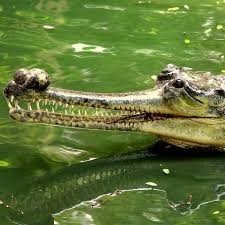
  • A lone female gharial has temporarily overshadowed the one-horned rhino in Kaziranga National Park and Tiger Reserve in eastern Assam.
  • Wildlife officials and specialists are uncertain how this gharial came to inhabit a stretch of the Brahmaputra within the park, but they believe the adult-sized reptile is crucial for repopulating the river with gharials.
  • The gharial (Gavialis gangeticus) is distinguished by its elongated snout.
  • It was believed to have been wiped out from the Brahmaputra River system in the 1950s, with unverified sightings in the 1990s.
  • The female gharial was first spotted in 2021 within the Biswanath Wildlife Division of the 1,307.49-sq. km Kaziranga.
  • The Turtle Survival Alliance Foundation India (TSAFI) and the Assam Forest Department surveyed a 160 km stretch of the Brahmaputra from the Kaliabhomora bridge to the Kamalabari Ghat in Majuli.
  • The female gharial has been solitary for over three years and is nearly ready to breed.
  • One of the 10 recommendations in the survey report is the “high-priority” reintroduction of gharials in the Brahmaputra.
  • The tiger reserve has suitable conditions for a gharial breeding program.
  • If approved, gharials are likely to be brought from the Kukrail gharial breeding centre near Lucknow.
AspectMugger (Marsh Crocodile)Estuarine (Saltwater) CrocodileGharial
DescriptionAn egg-laying, hole-nesting species, known to be dangerous.The largest living crocodile species, notorious as a maneater.Known for their long, thin snouts resembling a pot (ghara in Hindi), relatively harmless and fish-eating.
HabitatFound mainly in the Indian subcontinent, inhabiting freshwater habitats, coastal saltwater lagoons, and estuaries.Found in Odisha’s Bhitarkanika National Park, the Sundarbans, Andamans, and Nicobar Islands, as well as Southeast Asia and northern Australia.Primarily found in the fresh waters of Himalayan rivers, especially the Chambal River. Secondary habitats include Ghagra, Gandak, Girwa, Ramganga, and Sone rivers.
ThreatsThreatened by habitat destruction, fragmentation, transformation, fishing activities, and use of crocodile parts for medicinal purposes.Threatened by illegal hunting, habitat loss, and a negative reputation as a maneater.Threatened by habitat destruction and river pollution.
Protection StatusListed as Vulnerable on the IUCN Red List.   Protected under CITES Appendix I and   Schedule I of the Wildlife Protection Act, 1972.Listed as Least Concern on the IUCN Red List (except populations in Australia, Indonesia, and Papua New Guinea, which are in Appendix II of CITES).   Protected under Schedule I of the Wildlife Protection Act, 1972.Listed as Critically Endangered on the IUCN Red List.   Protected under CITES Appendix I and   Schedule I of the Wildlife Protection Act, 1972.

Dig Deeper: Read about other species of crocodiles found across the world.

  • The goal of eradicating wild-type poliovirus type-1 (WPV1) by 2026 has become tougher due to a resurgence in Pakistan and Afghanistan since 2023.
  • Despite a seeming decrease, with six cases in Afghanistan and five in Pakistan already in 2024 is an increasing trend.
  • The total number of cases for 2024 might surpass 2022.
  • Environmental Samples: The circulation of WPV1 in the environment is rising. Positive environmental samples in Pakistan have increased, especially from cities known as historical reservoirs for the virus. Rising positive samples indicate polio campaigns are not achieving full coverage.
  • While children in Pakistani cities are largely immunized, unvaccinated or not fully vaccinated children are at heightened risk, with two of the six 2023 cases from Karachi.
  • There is a grave risk of international spread from Pakistan to Afghanistan, especially with over 0.5 million Afghan refugees forced to leave Pakistan and an estimated 0.8 million more to be evicted.

Polio Free India

  • India has been Polio free since 2011.
  • There are three types of wild polioviruses – type 1, type 2 and type 3,
  • while bivalent Oral Polio Vaccine contains two types of poliovirus vaccines (P1 and P3) and protects against type 1 and type 3 wild polioviruses.
  • Type 2 component from the oral polio vaccine was removed as a part of the global polio end-game strategy.
  • In India, the last Type 2 wild polio virus case was detected in the year 1999.
  • As a part of efforts to maintain high immunity against all polioviruses, India provides inactivated poliovirus vaccine (IPV) and bOPV to all infants across the country under routine immunization

Dig Deeper: Read about the types of vaccine provided under India’s Pulse Polio Immunisation.