Search
Close this search box.

Trials, Medical ethics and the Orbit of power, UNESCO World Heritage Committee, 18th Lok Sabha

Table of Contents

(General Studies II – Governance Section – Issues Relating to Development and Management of Social Sector/Services relating to Health, Education, Human Resources.
General Studies IV – Theory Section – Ethical Concerns and Dilemmas in Government and Private Institutions; Laws, Rules, Regulations and Conscience as Sources of Ethical Guidance.)

  • The whistle blowers Rasheeda Bee, Nawab Khan, Rachna Dhingra and Nausheen Khan wrote a letter to Prime Minister and the then Minister of Health and Family Welfare.
  • They alleged irregularities and ethical violations in the conduct of the clinical trial for Bharat Biotech’s Covaxin. It highlights the issue of Trials, Medical Ethics and Orbit of Power in India.

Issues with clinical trials in India:

  • Medical ethics deals with the right choices of conduct in the field of human health. It deals with the distinction between what is considered right or wrong at a given time in a given culture.
  • Clinical Trials are a set of practice that helps certify a new drug molecule as safe and efficacious before reaching the market.

Ethical Issues regarding Clinical Trials:

  1. Side Effects: Medical research often entails minor pain, discomfort, or injury from invasive procedures, or potential harm from drug side effects.
  2. Lack of Transparency: Some researchers and sponsors may bypass the regulatory framework to expedite trials for increased profit. There is a nexus managing the intertwined relationships among sponsors, researchers, regulators, and ethics committees.
  3. Targeting Vulnerable Populations: Those in desperate financial situations can become easy targets for unethical clinical trials.
  4. Lack of Informed Consent: Complex language in consent forms can make them difficult to understand, particularly for those with low literacy levels.
  5. Compensation: Participants sometimes fail to receive compensation when clinical trials do not succeed.
  6. Personal Ethics of Researchers: understanding group think and organisational wrongdoing, loyalty to the ivory tower, fear of retribution, social conformity, status hierarchies and exercise of power pushes the individuals to by pass their consciousness.

Case Study

A publication by GAYATRI SABERWAL in a journel Global Public health highlights the issues in Ethics committees. Phase II or III interventional studies registered in the Clinical Trials Registry–India (CTRI) identified as many as 30 problems with the way in which our ethics committees function.

Government Regulation of Clinical Trials in India:

  • Drugs and Cosmetics Act 1940: In India, regulations pertaining to clinical trials are placed in Schedule “Y” of the Drugs and Cosmetics Act 1940, and the rules framed thereunder.
  • The Drugs Controller General of India (DCGI) is an official of the Central Drugs Standard Control Organization (CDSCO) who is the final regulatory authority for the approval of clinical trials in the country.
  • ICMR Ethical Guidelines: It mandates setting up of Ethics Committees (EC’s) at the institutional levels, for the purpose of scrutinizing and approving a clinical trial before it begins; and to conduct periodic reviews of the progress of the trial.

Reforms Needed:

  • Whistle Blower protection: Unlike the United States, India does not have a law that protects those who take great personal risks to bring wrongdoing to public notice.
  • Regulatory Approval: The approval process is slow due to new requirements for the submission and review of clinical trials which needs to be streamlined.
  • Patient Recruitment: The recruitment of patients depends on the availability of investigator sites and patient willingness.
  • Ensuring Quality and Compliance: Institutional ethics committees (ECs) should devote time and effort to understanding ethical issues such as human protection, independent decision-making, handling conflict of interest, reviewing safety.
  • Development of National Clinical Trial Infrastructure: Researchers in low- to middle-income settings need support and training to conduct clinical trials independently or collaboratively.
  • Regulatory Approval: Clear and unambiguous regulatory provisions applicable to diverse situations would enhance the efficiency of trial approval.
  • Education in Ethical Clinical Trials: Different stakeholders, including CDSCO functionaries, IEC members, academicians, CROs, and industry professionals, should be educated on ethical clinical trial practices.
  • Compensation for Trial: Related Death or Injury: Insurance coverage should include all costs associated with investigations and treatments.

The bigger issue in our country is the historic and repeated violation of informed consent, competence of medical force with specialised knowledge and experience, personal Ethics of Researcher and Lack of institutional safeguard for whistle blowers. We have to resolve these issues and a well-designed and working system of checks and balances has to put in place.
  • The Ministry of Information & Broadcasting issued a new advisory that requires advertisers and advertising agencies in the food and health sectors to upload an annual self-declaration certificate.
  • The self-declaration certificates are to be uploaded on the Broadcast Seva Portal for TV/radio advertisements and the Press Council of India portal for print media/internet advertisements.
  • As per the directions of the Hon’ble Supreme Court of India, it shall be the responsibility of the advertisers/advertising agencies to ensure that every advertisement being issued by them is in adherence to the applicable Indian laws, rules and regulations in letter and spirit.

Dig Deeper: Read about the Broadcast Seva Portal and Press Council of India.

  • Impact of Air Pollution on Mortality Rates:
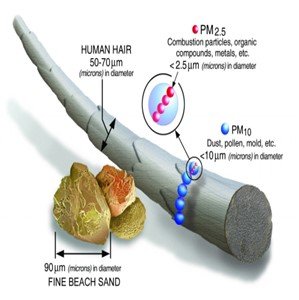
  • According to a study published in Lancet Planet Health, a spike in air pollution in Indian cities with cleaner air may raise death rates more than in cities with higher pollution levels. For example, an increase in air pollution in Bengaluru can elevate death rates more significantly than in Delhi, despite Delhi’s higher background pollution levels.
  • However, cities with high pollution loads saw a greater fraction of annual deaths attributable to air pollution, with 11.5% in Delhi and 4.8% in Bengaluru.
  • Bengaluru’s population experienced 30% of the daily pollution exposure compared to Delhi residents.
  • The study confirmed that mortality risk increased more quickly at lower PM 2.5 levels but plateaued as levels increased.
  • Significantly, mortality risk remained very high (2.65%) even on days with PM 2.5 levels below the current Indian national air quality standard of 60 micrograms per cubic meter.
  • Study Findings:
  • Scientists analysed pollution and death registry data from 10 cities: Ahmedabad, Bengaluru, Chennai, Delhi, Hyderabad, Kolkata, Mumbai, Pune, Shimla, and Varanasi.
  • Nearly 30,000 deaths, or 7.2% of the annual deaths in these cities, were due to short-term PM 2.5 exposure.
  • The study found that total daily deaths in these cities rose by 1.42% for every 10 micrograms per cubic meter increase in average PM 2.5 exposure over two days.

Dig Deeper: What are the current Indian National Air Quality standards for various pollutants?

  • The Anusandhan National Research Foundation (ANRF), a high-level body aimed at directing scientific research in India, has no representation from the Indian industry, as per the Ministry of Science and Technology’s recently published list of members.
  • State universities, expected to be major beneficiaries, are also not represented.
  • Only two universities are represented: the Indian Institute of Science and the Tata Institute of Fundamental Research.
  • The 15-member Governing Board includes only one industrialist.
  • Other members include the Ministers of Science and Education, and the Secretaries of departments under the Ministry of Science and Technology.
  • It aimed to boost research with ₹36,000 crore (70% of its ₹50,000 crore five-year outlay) from non-government sources, including industry and philanthropists.
  • The ANRF replaces the Science and Engineering Research Board (SERB), established in 2008, and proposes a broader definition of research, encompassing science, engineering, IT, liberal arts, social sciences, and humanities. The Board includes the chair of the Indian Council of Historical Research.

The ANRF Act, 2023

  • ANRF aims to seed, grow and promote research and development (R&D) and foster a culture of research and innovation throughout India’s universities, colleges, research institutions, and R&D laboratories.
  • ANRF will act as an apex body to provide high-level strategic direction of scientific research as per National Education Policy (NEP). 
  • The Act empowers the Prime Minister to nominate up to five members from business or industry to the 15-member Governing Board.
  • Principal Scientific Adviser to the Union government, serves as the Member Secretary.

Dig Deeper: Read about the VAJRA faculty scheme.

The World Heritage Convention, 1972

  • It uniquely links nature conservation with the preservation of cultural properties.
  • It emphasizes the need to maintain a balance between people and nature.
  • The Convention defines natural and cultural sites eligible for the World Heritage List, outlining the duties of States Parties in identifying, protecting, and preserving these sites. By ratifying the Convention, countries commit to safeguarding both World Heritage sites and their national heritage
  • India will host the 46th session of the UNESCO World Heritage Committee in July at the Bharat Mandapam in New Delhi.
  • The event, organised by the Archaeological Survey of India, is expected to be inaugurated by Prime Minister Narendra Modi.
  • Over 2,500 delegates from 195 countries, including State Parties, advisory bodies, senior diplomats, heritage experts, scholars, and researchers, will attend.
  • State Parties are countries that have adhered to the World Heritage Convention.
  • The World Heritage Committee consists of representatives from 21 State Parties elected by the General Assembly.

Dig Deeper: List various UNESCO World Heritage Sites identified in India

  • The first session of the 18th Lok Sabha and the corresponding Rajya Sabha session were notable for a renewed spirit of parliamentary debate, despite excessive combativeness from both the government and the Opposition.
  • Parliamentary Procedures and Challenges:

Constitutional Provisions

  • Article 84 stipulates the qualifications for membership of Parliament. It requires that a person must make and subscribe to an oath or affirmation before taking his seat in the Parliament.
  • The third Schedule provides the forms of oaths or affirmations for various constitutional offices, including Members of Parliament.
  • MPs must swear to bear true faith and allegiance to the Constitution of India, uphold the sovereignty and integrity of India, and faithfully discharge their duties.
  • The rise of a strong Opposition and the return of coalition politics, due to the leading party lacking an absolute majority, may restore Parliament’s role.
  • Increased Opposition numbers could ensure more Bills are scrutinized by parliamentary standing committees, acting as a check on the government.
  • The previous Lok Sabha saw the suspension of 146 Opposition MPs and functioned without a Deputy Speaker, a post usually reserved for the Opposition.
  • Oath-Taking Rules:
  • Lok Sabha Speaker formed a committee to establish rules for the “oath-taking and affirmation” of MPs, ensuring any deviations can be punished, as announced by the Parliamentary Affairs Minister.
  • This decision follows several instances of MPs raising slogans during their oath-taking.
  • Oath or affirmation is a constitutional process with no room for politicization and must follow the prescribed format.
  • MPs have traditionally adhered to the standard oath or affirmation format as prescribed in the Third Schedule of the Constitution.
  • The oath can be taken in any of the languages specified in the Eighth Schedule of the Constitution, and MPs typically choose a language they are most comfortable with.

Dig Deeper: Read about the various parliamentary committees headed by the Speaker.