Search
Close this search box.

Indian Higher Education, New Criminal Laws, Project 76 of DRDO

Table of Contents

(General Studies II – Governance Section – Issues Relating to Development and Management of Social Sector/Services relating to Health, Education, Human Resources.)

  • Higher education system plays an important role for the country’s overall development which includes industrial, social, economic etc.
  • The role of Indian higher educational institutes such as colleges and universities in the present time is to provide quality-based education in the field of education, research.
  • But recent issues related to examination conducted by NATIONAL TESTING AGENCY has led to unprecedented delays in admission into higher institutions.

Key facts

  1. According to All India Survey of Higher Education (AISHE) 2021-22 published in 2024, Student enrolment: “Gross enrolment ratio is 28.4%” i.e. 43.3 million in 2021-22 up from 20.7 million 2014-15. 
  2. 78.6% of colleges are privately managed, of which 65.2% are private-unaided and 13.4% are private-aided.
  3. The Pupil-Teacher Ratio (PTR) in universities and colleges is 28.
  4. The Gender Parity Index, which shows the ratio of female GER to male GER, is 1.01 at the all-India level, indicating gender parity.

 Challenges in the Indian higher education

  • Irregular and Delayed Admissions: Common examination for universities conducted by NTA has led to unprecedented delays in admissions as well as paper leaks have decreased the trust.
  • Regulatory issues: Management of the Indian education faces challenges of over-centralization, bureaucratic structures and lack of accountability, transparency, and professionalism.
  • Increased Burden: As a result of the increase in a number of affiliated colleges and students, the burden of administrative functions of universities has significantly increased and the core focus on academics and research is diluted.
  • Inequitable Access and Low GER: Access to higher education remains skewed, with significant disparities based on socio-economic background, gender, and geographical location.
  • Limited Funding: The Interim Budget 2024-25 for Education in India has been reduced by 7%, with the allocation for the University Grants Commission slashed by 61%.
    • India’s R&D investment as a percentage of GDP is still at 0.64%, lagging behind China. (2.4%), Germany (3.1%), South Korea (4.8%), and the United States (3.5%).
  • Inadequate Industry-Academia Collaboration: There is a lack of effective collaboration between higher education institutions and industries in India, leading to a skill gap among graduates.
  • Shortage of Faculty and Brain Drain: India faces a severe shortage of qualified faculty members in higher education institutions. As of 2023, over 30% of teaching positions were vacant in 45 Central Universities across India.
  • Politicization and Lack of Autonomy: There have been concerns about the increasing politicization of higher education institutions, with allegations of political interference in appointments and curriculum decisions.
    • Recent issue between Kerala state government and Governor
  • Lack of Quality Research work: Indian higher institutions unable to produce quality research. India produces the third highest number of research papers but lacks quality as compared to the USA and China.
  • Inadequate Infrastructure and Facilities: Many institutes are running without proper infrastructure and basic facilities like library, hostels, transport, sports facility etc. which is desirable to rank the quality institution.
  • Access to Equity: Bridging the gap between urban and rural education as well as providing opportunities for underprivileged communities.

Suggestions and Solutions 

  • Redefining the Role of Universities: Shift the focus from rote learning to practical skill development through project-based learning, internships, and industry collaborations from second year.
    • Encouraging universities to work with local communities on social development projects, promoting social responsibility and civic engagement among students.
    • Transforming higher educational institutes from mere Degree Issuers to Skill Generators.
  • Transferring Education to State List: States can develop customized educational policies, syllabi, testing, and admissions procedures suited to local contexts
  • Open Education Resources (OER) Initiatives: Enhancing the National Digital Library of India and promoting the development and adoption of open educational resources, similar to the MIT OpenCourseWare initiative, which provides free access to course materials and lectures.
  • Entrepreneurship and Innovation Centers: Establishing dedicated entrepreneurship and innovation centers within universities, modeled after successful examples like Stanford University’s StartX and entrepreneurship programs.
  • Transnational Education Partnerships: Promoting transnational education (TNE) partnerships, where Indian higher education institutions collaborate with reputed international universities to offer joint degrees, twinning programs, or branch campuses.
  • Competency-based Credentialing and Block Chain Certificates: Implementing competency-based credentialing system that recognizes and validates skills and competencies acquired through various learning pathways.

In conclusion, India’s higher education system, though facing challenges, has immense potential for transformation. By implementing strategic reforms such as enhancing skill development, fostering industry collaboration, and promoting open educational resources, India can build a robust, equitable, and innovative education landscape. These efforts will drive socio-economic growth, positioning India as a global leader in education and research, and offering hope for a brighter future.

Dig Deeper: Read about National Education Policy and its analysis in context of Higher Education in India.
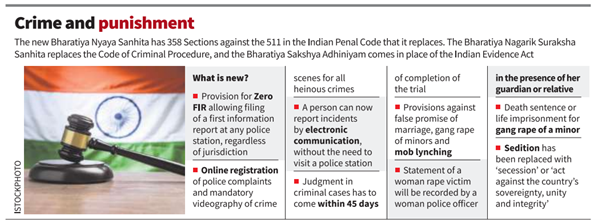
  • As three new criminal laws come into effect across the country today.
  • States can bring their own amendments to certain provisions of the Bharatiya Nagrik Suraksha Sanhita (BNSS), which replaces the Code of Criminal Procedure (CrPC).
  • The BNSS outlines procedures and conditions for arrest, bail, and custody.
  • The Bharatiya Nyaya Sanhita (BNS), replacing the Indian Penal Code of 1860, may soon be amended to include sections on sexual crimes against men and transgender persons, till that amendments police officers should use related sections in the BNS, such as wrongful confinement and physical hurt, for such complaints.
  • The third law, Bharatiya Sakshya (BS), replaces the Indian Evidence Act, of 1872.

Concerns

  • New power to handcuff without court permission
  • Reintroduction of solitary confinement.
  • FIR can be registered anywhere in the country, potentially leading to jurisdictional abuses and violations of fundamental rights.
  • Cognizable offenses will be registered under Section 173 of the BNSS, instead of Section 154 of the CrPC.
  • However, the IPC and CrPC will still run concurrently with the new laws for pending cases and crimes reported later that occurred before July 1.
  • Training and support have been provided to all states to help them adapt to the new system.
  • FIRs are filed through the Crime and Criminal Tracking Network Systems (CCTNS), which also includes unusual recordings during search and seizure processes.
  • The Home Ministry is testing eSakshya, a mobile-based application to help police record crime scenes, search, and seizure, and upload files to a cloud-based platform.
  • Some states have developed their own systems based on their capacities.
  • For instance, the Delhi Police have developed the e-Pramaan application, which aids investigating officials in recording crime scenes and generating a hash value with a certificate under Section 62 of Bharatiya Sakshya.

Dig Deeper: Go through State List subjects under Schedule 7 of the Indian Constitution.

  • Unhygienic and stagnant water resources, along with high temperatures, could be contributing factors to the recent rise in primary amoebic meningoencephalitis cases in Kerala.
  • The infection was first detected in Alappuzha municipality in 2016.
  • There has been a global rise in such cases due to warming temperatures and stagnant, unhygienic water resources, as the amoeba thrives in warm water.
  • While bacterial meningitis cases among children have decreased due to vaccination, the symptoms of the girl suggested the possibility of amoebic meningoencephalitis.
  • Bacterial Meningitis vs. Amoebic Meningoencephalitis
AspectBacterial MeningitisAmoebic Meningoencephalitis
CauseBacteria (e.g., Streptococcus pneumoniae)Amoeba (Naegleria fowleri)
TransmissionRespiratory droplets, close contactContaminated water entering the nose
SymptomsFever, headache, stiff neck, nausea, confusionSevere headache, fever, nausea, confusion
Onset & ProgressionRapid, within hours to daysRapid, often fatal within a week
DiagnosisLumbar puncture, blood cultures, imagingCSF (cerebrospinal fluid) examination, PCR ​(Polymerase Chain Reaction)
TreatmentIntravenous antibiotics, corticosteroidsAntifungal and antimicrobial drugs
PreventionVaccination, good hygieneAvoid warm freshwater activities, use nose clips

New Vaccines

  1. Inactivated Polio Vaccine (IPV): IPV has been introduced in UIP as part of the Global Polio end-game strategy, to mitigate the risk associated with tOPV to bOPV switch.
  2. Rotavirus vaccine (RVV): RVV has been introduced to reduce mortality and morbidity caused by Rotavirus diarrhoea.
  3. Measles Rubella (MR) vaccine: India is committed to the goal of measles elimination and rubella control and to achieve this goal MR vaccine was introduced.
  4. Pneumococcal Conjugate Vaccine (PCV): PCV has been launched to reduce Infant mortality and morbidity caused by pneumococcal pneumonia.
  5. Tetanus and adult diphtheria (Td) vaccine: TT vaccine has been replaced with Td vaccine in UIP to limit the waning immunity against diphtheria in older age groups. Td vaccine to be administered to adolescents at 10 and 16 years of age and to pregnant women.

(See Topic of Brain-Eating Amoeba in May Current Affair magazine)

Dig Deeper: Is Vaccine of Meningitis part of the Universal Immunisation Program of India? What is Mission Indradhanush?

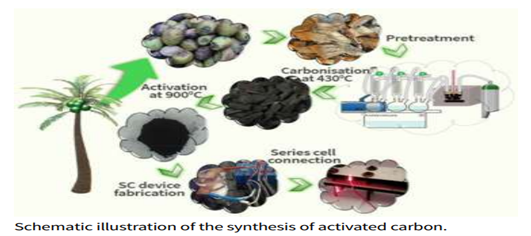
  • Researchers at the Government College for Women, Thiruvananthapuram, have developed a method to produce activated carbon from coconut husks, a major agricultural residue in Kerala.
  • This biowaste-derived activated carbon promises sustainable and efficient solutions for high-performance supercapacitors due to its availability, low cost, and eco-friendly nature.
  • Supercapacitors, which offer significantly higher capacitance and energy storage capacity than conventional capacitors, are crucial for sustainable energy storage.
  • Finding an ideal electrode material for supercapacitors has been challenging, but the research team discovered that prototype supercapacitors made from coconut husk-derived activated carbon are four times more efficient than existing ones.

Activated carbon

  • It is produced from high-carbon materials like lignocellulosic and coal, is used primarily for water purification.
  • A material with a large surface area, microporosity, and complex surface chemistry, making it effective at adsorbing heavy metals.
  • There are two types: H-type (positively charged and hydrophobic) and L-type (negatively charged and hydrophilic).
  • Activated carbon comes in four forms: powdered (PAC), granular (GAC), fibrous (ACF), and cloth (ACC), with commercial activated carbon (CAC) widely used globally.
  •  The team utilized an innovative microwave-assisted method designed at the college’s Centralised Common Instrumentation Facility (CCIF).
  • Their findings have been published in the American Sustainable Resource Management Journal.

Dig Deeper: Read about the difference between Capacitors and Supercapacitors.

  • As the procurement of new submarines under P-75I continues, the Defence Research and Development Organisation (DRDO) has initiated a preliminary study on the design and development of an indigenous conventional submarine under Project-76.

Air Independent Propulsion:

  • An AIP module, designed and developed by DRDO, is awaiting installation on the Scorpene-class submarines.
  • It is phosphoric acid-based, enhances conventional submarines’ endurance and reduces detection chances by enabling longer submersion.
  • The first Scorpene-class submarine, Kalvari, is expected to undergo refit in 2025.
  • The Defence Ministry has authorized DRDO to determine the project contours. After this, a formal proposal will be presented to the Cabinet Committee on Security (CCS) for project sanction.
  • Project 76 aims to build a conventional submarine with substantial indigenous content, including weapons, missiles, combat management systems, sonars, communications, electronic warfare suites, masts, and periscopes.
  • This project will continue the advanced technology vessel (ATV) initiative, which includes the Arihant series of nuclear ballistic missile submarines and another project for nuclear-powered submarines.
  • The Navy has a 30-year submarine building program and intends to design and build conventional submarines indigenously after P-75I.

Dig Deeper: Read about ongoing Projects of DRDO and Compare it with ISRO.

  • In 2023, India discovered a total of 641 species — 442 entirely new to science and 199 newly recorded in the country — were added to Indian fauna.
  • Invertebrates constituted the majority, with 564 new species, while only 77 new vertebrate species were discovered, mainly fish.
  • Additionally, 339 taxa were added to India’s plant database, including 171 new to science and 168 new to distributional records.
  • New Species
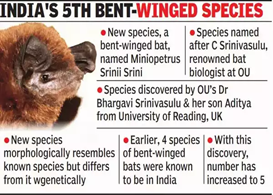
  • Bat: Miniopterus srinii, a new species of bent-winged bat, was found in Kodagu, Karnataka.
  • Himalayan Ibex: Capra himalayensis, proving that the Himalayan Ibex, found in the trans-Himalayan ranges of Jammu and Kashmir, Ladakh, and Himachal Pradesh, is distinct from the Siberian Ibex.
  • Turmeric: A new species of turmeric, Curcuma kakchingense, was discovered in Kakching, Manipur.
  • Asystasia venui: A flowering plant discovered in the Acharya Jagdish Chandra Bose Indian Botanic Garden, West Bengal.
  • Notable new plants include wild relatives of horticultural, agricultural, medicinal, and ornamental plants like begonias, impatiens, legumes, zingibers, and orchids, as detailed in the Botanical Survey of India’s Plant Discoveries 2023 report.
  • Regional Highlights
  • Most new animal discoveries were in southern India, with Kerala leading (101 additions), followed by West Bengal (72) and Tamil Nadu (64).
  • West Bengal topped new plant discoveries with 52 new taxa, followed by Kerala and Uttarakhand.
  • The Western Ghats and North Eastern Regions contributed 14% of total discoveries.
  • The Environment Minister also launched the ‘Fauna of India Checklist Portal,’ covering 121 checklists of all known taxa across 36 phyla, including 1,04,561 animal species, with endemic, threatened, and scheduled species highlighted.

Dig Deeper: Read about the Zoological Survey of India.