
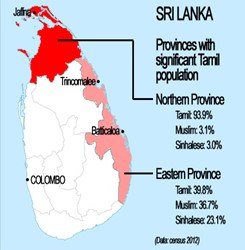
- The 13th Amendment (13A) to the Sri Lankan Constitution was introduced after the Indo-Sri Lankan Accord of 1987, signed by then-Sri Lankan President J.R. Jayewardene and Indian Prime Minister Rajiv Gandhi.
- The amendment aims to provide political autonomy to the Tamil minority by devolving powers to provincial councils.
13A Implementation Challenges
- Since its introduction, seven presidents have hesitated to fully implement the 13A.
- The hesitation is particularly with regards to the devolution of police and land powers, due to fears of separatism.
- Incumbent President Ranil Wickremesinghe has proposed reactivating provincial councils with limited powers, excluding police powers.
- This proposal faced opposition from the Buddhist clergy, who argue it could lead to the country’s division.
- It includes provisions for the establishment of nine provincial councils, with a temporary merger of the North and East provinces, claimed by Tamils as their traditional homeland.
- The Tamil demand for autonomy has been a long-standing issue since independence from Britain in 1948, escalating into armed conflict by the mid-1970s where the Sri Lankan government has been aggressive towards Tamil groups in the country.
- Recently, Opposition leader Sajith Premadasa has pledged to implement the 13A if elected in the upcoming elections. This has been opposed by ruling party, arguing that full implementation could encourage separatist movements like the LTTE.
Dig Deeper: Read about LTTE and Sri Lankan Civil War, along with important ports of Sri Lanka.
