Search
Close this search box.

Jaitkhamb, Przewalski Horses, 13th Amendment to the Sri Lankan Constitution

Table of Contents

Guru Ghasidas

  • Taught truth and noble conduct are synonymous with God.
  • Worked to eliminate untouchability, emphasized fraternity, social harmony, and women’s rights, and supported widow remarriage.
  • Preached ethical and dietary self-restraint and connected with the Kabir Panth.
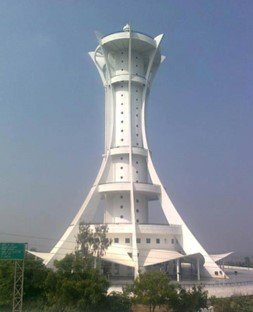
  • A huge mob from the Satnami community set fire to the Superintendent of Police (SP) office building in Baloda Bazar district of Chhattisgarh over police’s handling of a case involving the desecration of a Jaitkhamb, a structure of sacred importance to the Satnamis, in Giraudpuri village last month.
  • Unidentified persons vandalised the jaitkhamb near the Amar Gufa in Giraudpuri Dham.
  • Giraudpuri is the birthplace of Guru Ghasidas, a 19th-century saint considered to be the founder of the Satnami sect in Chhattisgarh.
  • Satnami Sect –
  • Satnamis initially comprised mendicants and householders, who defied Mughal emperor Aurangzeb in 1672 but were crushed by his army.
  • Ghasidas founded the most significant group of Satnamis in Chhattisgarh.
  • Ghasidas was a farm servant from the Chamar caste (Dalit, formerly leather tanners, now farmers).
  • “Path of the True Name” provided a religious and social identity to Chhattisgarhi Chamars.
  • It defied derogatory treatment of the oppressed and exclusion from Hindu temples.

Dig Deeper: Read about Guru Ghasidas National Park.
  • Solar Ultra Violet Imaging Telescope (SUIT) and Visible Emission Line Coronagraph (VELC) payloads aboard India’s maiden solar mission, Aditya-L1, have captured images of the sun and its dynamic activities during the solar storm, which occurred in May.
  • Several X-class and M-class flares erupted in the active region AR13664 on the sun. This was associated with coronal mass ejections (CMEs).
  • The ISRO released six images of the sun taken by the SUIT payload at different wavelengths.
  • According to the ISRO, these images will help in
  • Studying solar flares
  • Energy distribution and sunspots
  • Understanding and predicting space weather
  • Monitoring solar activity and UV radiation over a wide wavelength range
  • Aid in the study of long-term solar variations.
  • In addition, the VELC payload also carried out observations in one of the spectroscopic channels for the emission line 5303 Angstrom.
  • Raster scans of the solar corona were carried out to capture the coronal activities in this particular spectral line.
  • Two other remote sensing payloads, SoLEXS and HEL1OS, captured CME events.
  • The two in-situ payloads, ASPEX and MAG, captured CMEs during their passage through the sun-earth L1 point (L1).

Dig Deeper: Read about NASA’s Solar mission and the critical importance of Lagrange points.

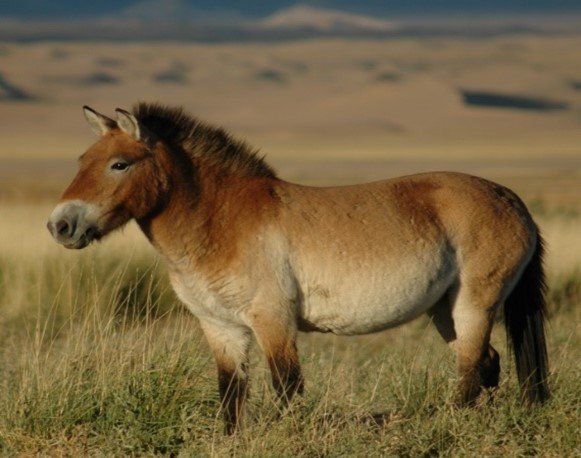
  • Przewalski Horses are a species of stockily built horses with large heads that share a common ancestry with modern domestic horses but are genetically different.
  • Przewalski horses are commonly referred to as one of the world’s last breeds of wild horses.

The Saiga Antelope

  • Kazakhstan’s conservation efforts extend beyond Przewalski horses.
  • The Saiga antelope, once endangered, now has a population of about two million, thanks to conservation policies by Kazakh authorities and NGOs.
  • IUCN categorises Saiga Antelope as Near-threatened.
  • IUCN classified it as Endangered in its Red data book last assessed in 2014.
  • Przewalski horses are suited to the steppe and are capable of resisting harsh winters like the ones in Kazakhstan.
  • The Prague and Berlin zoos led a project aimed to preserve these horses.
  • Recently three Przewalski horses translocated to the Kazakh steppe, their native habitat. These horses are the first of 40 to be released over the next five years.
  • They are initially under observation in the Golden Steppe nature reserve before being fully released into the wild.
  • Currently, there are 2,000 Przewalski horses worldwide, mainly in China and Mongolia, but also in France, Russia, and the Chernobyl exclusion zone.
  • In 1998, 30 specimens were introduced to Chernobyl, and their population has since grown to 210.

Dig Deeper: Compare Project Cheetah with Przewalski Horse Reintroduction Project

  • Several media reports claimed Cochin Shipyard Limited (CSL) is set to begin the construction of an add-on Vikrant-class 40,000-odd tonne platform.
  • Building the Indigenous Aircraft Carrier-2, or IAC-2 with upgrades, modifications and greater local content compared with IAC-1 Vikrant, is also intended to prevent CSL’s carrier-building expertise, from lapsing into disuse.
  • The IAC-2 would supplement INS Vikramaditya, the 46,000-tonne refurbished Russian Kiev-class vessel and the 40,262-tonne short-take off barrier-arrested recovery (STOBAR) Vikrant, fulfilling the navy’s enduring requirement for one carrier each for its two seaboards, and another in reserve.
  • Challenges to Aircraft carriers:
  • The astronomical cost of around $5-6 billion
  • Anti-access/area denial (A2/AD) capability (multi-layered defensive strategy to deter enemy carrier operations) honed by China and Pakistan
  • Recent advances in cruise missile technology are a serious threat
  • Opportunity cost is a short supply of critical surface combatants like corvettes, nine-sweepers, destroyers, frigates, naval utility helicopters, unmanned aerial vehicles, and other assorted missiles and ordnance.
  • Many navalists favoured upgrading the military capabilities of the Andaman and Nicobar archipelago, by creating an A2/AD maritime ‘exclusive zone’ around it to deter, amongst others, the hegemonic Chinese navy.
  • And while the archipelago was undoubtedly ‘immovable’ it was likely to be cheaper than an aircraft carrier, besides being unsinkable.

Dig Deeper: What is China’s String of Pearls Theory and its counter; India’s Necklace of Diamonds?

  • World Oceans Day was on June 8, celebrating the wonders of the Indian Ocean, the smallest of the three major oceans (the Pacific and Atlantic are the other two), which is receiving attention for its rapid warming and influence on global ocean dynamics.
  • The Indian Ocean is critical for understanding the earth’s ocean response to greenhouse gases and global warming.

Historical Influence

  • The reconfiguration of the Indian Ocean around three million years ago may have influenced human evolution.
  • This was by transforming East Africa’s rainforests into grasslands, possibly contributing to the development of bipedalism.
  • Known for dramatic monsoon winds, it brings rain vital for over a billion people in the Indian subcontinent, supporting fisheries, agriculture, and energy production.
  • The North Indian Ocean’s cyclones are fewer but deadlier due to their rapid intensification and impact on densely populated coastal areas.

Oceanography

  • Unique configuration with the northern boundary closed by the Asian landmass, and southern connections to the Pacific and Southern Oceans through oceanic tunnels.
  • The Indonesian Throughflow brings warm water from the Pacific, affecting the Indian Ocean’s circulation, temperature, and salinity.
  • The Southern Ocean contributes colder, saltier water, mixing with Pacific waters and impacting global heat distribution.
  • The Indian Ocean is one of the fastest-warming oceans, contributing to heat waves and extreme rainfall in the Indian subcontinent.
  • The Indian Ocean supports diverse marine life, including anchovies, mackerel, sardines, tuna, dolphins, and occasionally whales.

Dig Deeper: Read about the Indian Ocean Rim Association (mandate, members etc) and Indian government rights over Polymetallic nodules in the southern Indian Oceans.

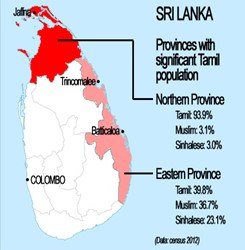
  • The 13th Amendment (13A) to the Sri Lankan Constitution was introduced after the Indo-Sri Lankan Accord of 1987, signed by then-Sri Lankan President J.R. Jayewardene and Indian Prime Minister Rajiv Gandhi.
  • The amendment aims to provide political autonomy to the Tamil minority by devolving powers to provincial councils.

13A Implementation Challenges

  • Since its introduction, seven presidents have hesitated to fully implement the 13A.
  • The hesitation is particularly with regards to the devolution of police and land powers, due to fears of separatism.
  • Incumbent President Ranil Wickremesinghe has proposed reactivating provincial councils with limited powers, excluding police powers.
  • This proposal faced opposition from the Buddhist clergy, who argue it could lead to the country’s division.
  • It includes provisions for the establishment of nine provincial councils, with a temporary merger of the North and East provinces, claimed by Tamils as their traditional homeland.
  • The Tamil demand for autonomy has been a long-standing issue since independence from Britain in 1948, escalating into armed conflict by the mid-1970s where the Sri Lankan government has been aggressive towards Tamil groups in the country.
  • Recently, Opposition leader Sajith Premadasa has pledged to implement the 13A if elected in the upcoming elections. This has been opposed by ruling party, arguing that full implementation could encourage separatist movements like the LTTE.

Dig Deeper: Read about LTTE and Sri Lankan Civil War, along with important ports of Sri Lanka.