
- Fifty-seven years have passed since the Six-Day War, fought between Israel and its Arab neighbours from June 5 to June 10, 1967.
- It significantly impacted Middle Eastern history, redrew the region’s map, and transformed power dynamics and relations.
- The war resulted from escalating tensions between Israel and its neighbours, mainly Egypt, Jordan, and Syria.
- These tensions originated from the establishment of Israel, causing the displacement and death of thousands of Palestinian Arabs and leading to a major refugee crisis.
- Egypt, under President Gamal Abdel Nasser, had strained relations with Israel due to territorial and water disputes.
- The years preceding the war saw a military buildup in Israel and the Arab states, aligned with Cold War alliances.
- Israel received support from the US, while the Arab states were backed by the Soviet Union.
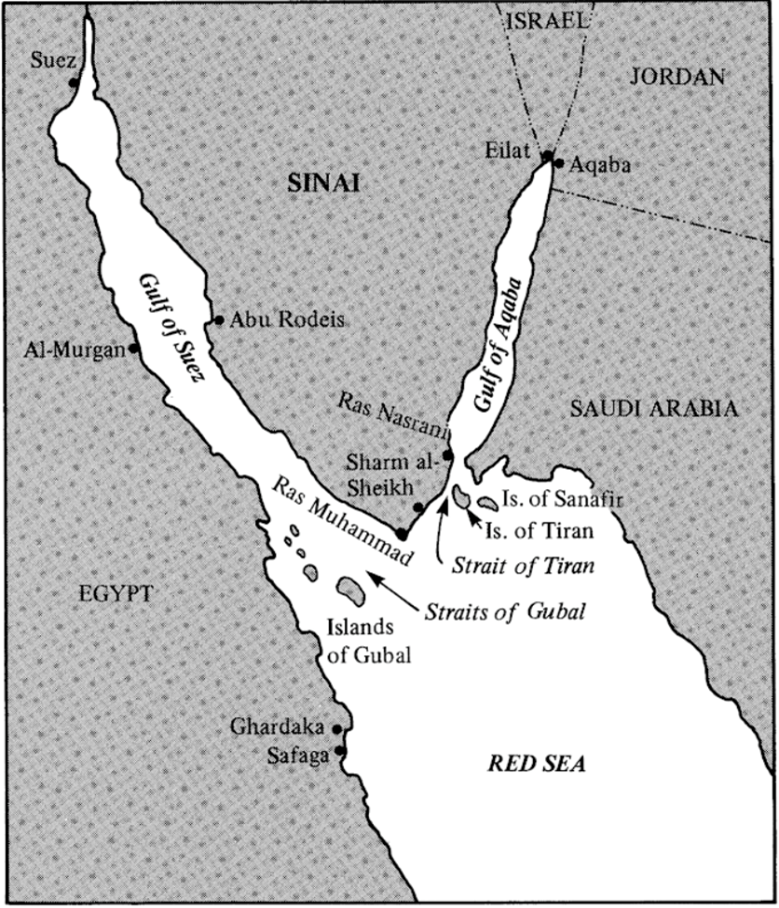
- The immediate trigger was Egypt’s naval blockade of the Straits of Tiran in May 1967, blocking access to the Israeli port of Elath and prompting Israel’s pre-emptive action.
- Israel achieved a swift victory, gaining control of the Sinai Peninsula and Gaza from Egypt, the Golan Heights from Syria, and the West Bank and East Jerusalem from Jordan in under a week.
Dig Deeper: Read about the Yom Kippur War (1973) and the emergence of the Palestine Liberation Organisation.
