Search
Close this search box.

Delhi Water Crisis, Six-Day War, ETS2 Gene

Table of Contents
  • The National Human Rights Commission (NHRC) issued notice to the Union Ministry of Women and Child Development and the States of Rajasthan, Madhya Pradesh, Uttar Pradesh, and Gujarat over a practice known as ‘Nata Pratha’.
  • The girls in some communities of these States are sold either on stamp paper or otherwise in the name of illegal or child marriage, mostly by their own families.
  • Given the immoral consequences, the Commission has called for its eradication and abolition.
  • The States have been directed to submit a report on measures taken or proposed to be taken in this regard within eight weeks.
  • It suggested that individuals involved in forcing women into Nata Pratha must be prosecuted under laws relating to human trafficking.

Dig Deeper: Read about the Devadasi tradition and Jogini system prevalent in parts of India.
Understanding Genetic Mutations

  • Our genes, DNA, and RNA are the fundamental building blocks of life, shaping our traits and health, mutations in our DNA can lead to cancer.
  • There are around 3,000 genes linked to cancer, each containing thousands of DNA codes, essential for understanding cancer.
  • Every year, approximately 33,000 people in India are diagnosed with brain cancer, according to the World Health Organization (WHO).
  • Brain cancer is the 19th most common type of cancer worldwide, as reported by the Global Cancer Observatory in 2020.
  • Diagnosing cancer often requires invasive procedures and risky surgeries to extract tissue samples, which can pose serious risks, including short-term paralysis or even death. Understanding genetic mutation can make diagnosis easier for patients.
  • Advances in Genetic Sequencing
  • Next-Generation Sequencing (NGS): This cutting-edge technology transforms our ability to decode genetic information with incredible speed and precision.
  • It allows simultaneous sequencing of millions of fragments, making it faster and more cost-effective than traditional methods.
  • Liquid Biopsy: A Revolutionary Diagnostic Tool
  • Unlike traditional surgeries, a liquid biopsy is less invasive than a detective gathering evidence.
  • A small blood sample is analysed for genetic patterns that indicate the presence of cancer.
  • This method provides real-time answers about the presence and type of malignancy, making the diagnosis process much easier and safer for patients.

Cancer Burden India

  • In 2022, the projected number of new cancer cases in India was 1,461,427, with a crude incidence rate of 100.4 per 100,000 individuals.
  • Approximately one in nine people in India is expected to face a cancer diagnosis during their lifetime.
  • Notably, lung cancer ranked highest among males, while breast cancer held the top spot for females.
  • Within childhood cancers (0-14 years), lymphoid leukemia emerged as the predominant.
  • Looking ahead, an estimated 12.8% increase in cancer incidence by 2025 is expected compared to 2020.

Dig Deeper: What is a Personalised Cancer Vaccine?

  • The Madhya Pradesh High Court’s ruling, denying protection to a couple because a marriage between a Muslim man and a Hindu woman is invalid even if registered under the Special Marriage Act (SMA), 1954, showcases a severe misunderstanding of the law.

Special Marriage Act

Section 4: Conditions Relating to Solemnization of Special Marriages

  • Marriage must be between any two persons regardless of their religion or faith.
  • Both parties must be of a valid age (the groom must be at least 21 years old, and the bride must be at least 18 years old).
  • Neither party should have a spouse living.
  • The parties should not be within the degrees of prohibited relationship unless the custom governing at least one of the parties permits such a marriage.
  • The judge incorrectly used Muslim law, concluding a Muslim cannot marry an “idolatress or fire-worshipper.”
  • SMA allows inter-faith couples to marry without religious rituals.
  • The judge’s question on inter-faith marriage validity under Muslim law is irrelevant for police protection.
  • Despite the counsel’s argument, the judge focused on Muslim law instead of SMA.
  • The judge misinterpreted the SMA’s clause on prohibited relationships.
  • The judgment wrongly implies personal law affects SMA validity, meant only to prevent misuse for prohibited relationships.
  • The court imposed religious personal law on a secular marriage option.
  • This ruling undermines the SMA, hampers a uniform civil code, and privileges Muslim personal law over secular law.
  • It may drive people to convert religions to marry.
  • Comparison of Special Marriage Act, 1954 and Hindu Marriage Act, 1955
FeatureSpecial Marriage Act, 1954Hindu Marriage Act, 1955
ApplicabilityAll Indian citizens, irrespective of religionHindus, Buddhists, Jains, Sikhs
Marriage TypeInter-faith, inter-caste, secularWithin Hindu community, based on rituals
Notice Period30-day notice requiredNo mandatory notice period
Registration RequirementMandatoryOptional but recommended
Solemnization ProcedureThe Marriage Officer, with three witnessesAccording to Hindu rites and rituals
Conditions for MarriageGroom 21, bride 18; no living spouse; not within prohibited relationshipsGroom 21, bride 18; no living spouse; not within prohibited relationships
Divorce GroundsAdultery, desertion, cruelty, mutual consent, incurable diseasesAdultery, desertion, cruelty, conversion, mutual consent, mental disorder
Succession LawGoverned by the Indian Succession Act, of 1925Governed by the Hindu Succession Act, of 1956
Judicial SeparationAvailableAvailable
Annulment and RestitutionProvisions includedProvisions included

Dig Deeper: Read about the Supriya Chakraborty v Union of India judgement.

  • The Supreme Court directed the Himachal Pradesh government to release 137 cusecs of water it has in surplus and asked Haryana to do the needful, to resolve the drinking water crisis in Delhi.
  • Delhi gets most of its water from the Yamuna, Ravi-Beas, and Ganga rivers. From the Ganga, via the Upper Ganga Canal in UP.
  • Two channels entering Delhi from Haryana — the Carrier Lined Channel (CLC) and the Delhi Sub Branch (DSB) — supply Delhi with water from the Yamuna and Ravi-Beas rivers.
  • A water-sharing agreement on the ‘surface flow’ of the Yamuna among Haryana, Uttar Pradesh, Rajasthan, Himachal Pradesh and Delhi in 1994, specified that Delhi is to get 0.076 billion cubic metres of water from March to June.
  • This allocation is regulated by the Upper Yamuna River Board, with the 1994 agreement due for revision in 2025.
  • In 1996, the Supreme Court held that the Wazirabad and Hyderpur reservoirs shall remain full to their capacity from the water supplied by Haryana through river Jamuna to fulfil the demands of Delhi.

Dig Deeper: Read about the Composite Water Management Index of NITI Aayog.

  • Fifty-seven years have passed since the Six-Day War, fought between Israel and its Arab neighbours from June 5 to June 10, 1967.
  • It significantly impacted Middle Eastern history, redrew the region’s map, and transformed power dynamics and relations.
  • The war resulted from escalating tensions between Israel and its neighbours, mainly Egypt, Jordan, and Syria.
  • These tensions originated from the establishment of Israel, causing the displacement and death of thousands of Palestinian Arabs and leading to a major refugee crisis.
  • Egypt, under President Gamal Abdel Nasser, had strained relations with Israel due to territorial and water disputes.
  • The years preceding the war saw a military buildup in Israel and the Arab states, aligned with Cold War alliances.
  • Israel received support from the US, while the Arab states were backed by the Soviet Union.
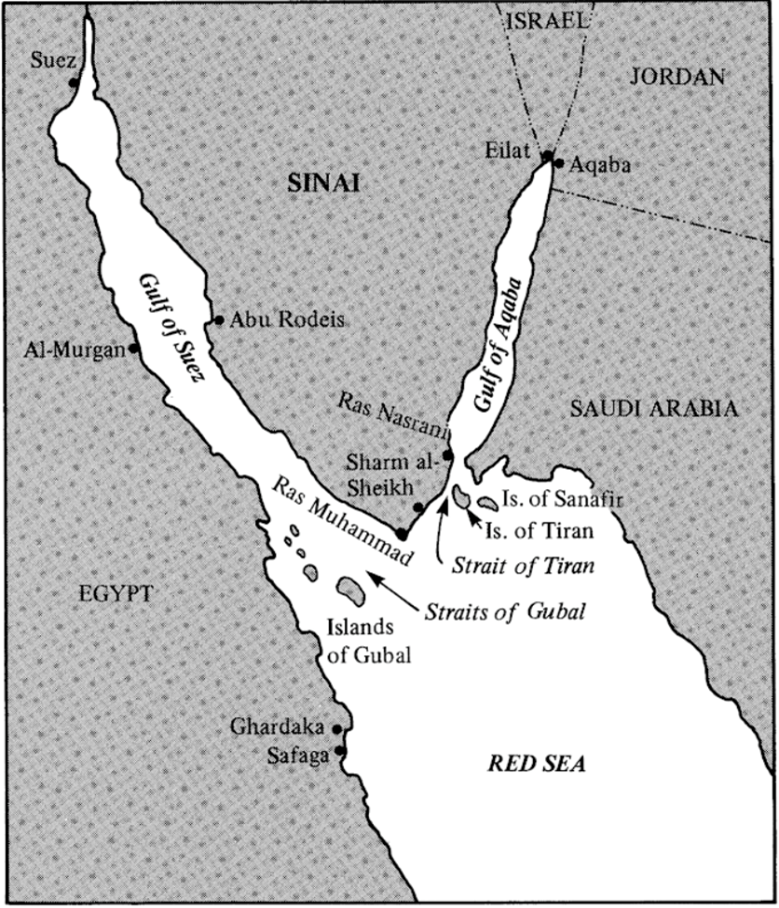
  • The immediate trigger was Egypt’s naval blockade of the Straits of Tiran in May 1967, blocking access to the Israeli port of Elath and prompting Israel’s pre-emptive action.
  • Israel achieved a swift victory, gaining control of the Sinai Peninsula and Gaza from Egypt, the Golan Heights from Syria, and the West Bank and East Jerusalem from Jordan in under a week.

Dig Deeper: Read about the Yom Kippur War (1973) and the emergence of the Palestine Liberation Organisation.

Inflammatory Bowel Disease:

  • An autoimmune disease, such as IBD, encompasses Crohn’s disease and ulcerative colitis.
  • Presently it affects approximately 5% of the world’s population and one in every 10 people in the United Kingdom.
  • Research published in Nature has uncovered a new biochemical pathway critical in inflammatory bowel disease (IBD).
  • It reveals that an enhancer (a section of DNA that is like a volume dial for nearby genes) in a ‘gene desert’ (an area of DNA that doesn’t code for proteins) linked to IBD activates the ETS2 gene in macrophages, which are immune cells pivotal to IBD.
  • Elevated ETS2 levels correlate with increased disease risk and drive inflammatory functions in macrophages that cause tissue damage.
  • Although direct ETS2 inhibitors are unavailable, the team identified MEK inhibitors, existing drugs for other conditions, as potential indirect suppressors of ETS2’s inflammatory effects.
  • These inhibitors successfully reduced inflammation in IBD patient gut samples.
  • Researchers are now exploring targeted delivery of MEK inhibitors to minimize side effects. This discovery could lead to more effective IBD treatments, addressing a pressing need as IBD prevalence rises.

Dig Deeper: What is gene desert and its functions?