Search
Close this search box.

Eucalyptus, Cocoa Production, Farm Subsidies

Table of Contents
  • The India Meteorological Department (IMD) has retained its outlook of an ‘above normal’ monsoon this year.
  • Quantitatively, the southwest monsoon seasonal rainfall over the country as a whole is likely to be 106% of the long-period average (LPA) with a model error of ± 4%.
Long Period AverageThe IMD predicts a “normal”, “below normal”, or “above normal” monsoon in relation to a benchmark “long period average” (LPA).LPA of rainfall is the rainfall recorded over a particular region for a given interval (like month or season) average over a long period of 50 years.The IMD’s recent prediction was based on the LPA of the 1971-2020 period, during which India received 87 cm of rain for the entire country on average. A 50-year LPA covers large variations in either direction caused by freak years of unusually high or low rainfall.

The monsoon ‘core zone’, which encompasses most of central India and is critical for the Kharif crop, and southern India is expected to see ‘above normal’ rainfall.

  • Cyclone Remal had given a push to the eastern branch of the approaching monsoon system.  It is uncertain if the monsoon would begin in Eastern India before Kerala —an extremely unusual, but not unprecedented phenomenon.
  • India’s strong monsoon rainfall is predicated on El Niño conditions withering away to ‘neutral’ conditions and the onset of La Niña conditions during the later part of the monsoon season.
  • At present, neutral Indian Ocean Dipole [IOD] conditions are prevailing over the Indian Ocean. The latest forecasts from many global climate models indicate positive IOD conditions are likely to develop during the monsoon season.
  • El Nino, La Nina and IOD conditions refer to temperatures in the Central Pacific, and the eastern and western halves of the Indian Ocean respectively.
ENSO and Indian Ocean Dipole
In a normal year, the eastern side of the Pacific Ocean, near the northwestern coast of South America, is cooler than the western side near the islands of the Philippines and Indonesia. This happens because the prevailing wind systems that move from east to west sweep the warmer surface waters towards the Indonesian coast. The relatively cooler waters from below come up to replace the displaced water. An El Nino event is the result of a weakening of wind systems that leads to lesser displacement of warmer waters. This results in the eastern side of the Pacific becoming warmer than usual. During La Nina, the opposite happens.These conditions, called El Nino Southern Oscillation or ENSO, affect weather events worldwide. Over India, the El Nino has the impact of suppressing monsoon rainfall.IOD, sometimes referred to as the Indian Nino, is a similar phenomenon, playing out in the relatively smaller area of the Indian Ocean.IOD is said to be positive when the western side of the Indian Ocean, near the Somalia coast, becomes warmer than the eastern Indian Ocean. It is negative when the western Indian Ocean is cooler.

La Nina conditions coupled with a favourable IOD spell good rains for India.

Dig Deeper: Read about other factors that influence the Indian Monsoon.
  • Caterpillars unlike most land-based animals can sense electric fields around them with small bristles called setae on their bodies a feat called electroreception, as per findings published in Proceedings of the National Academy of Sciences.
  • They studied four species of caterpillars: cinnabar moth, scarce vapourer moth, European peacock butterfly, and common wasp.
  • Researchers have long known that aquatic and amphibious animals use electroreception to detect both predators and prey.
  • Scientists have also found electroreception in arthropods like bumblebees, hoverflies, and spiders. Caterpillars, which are also arthropods.
  • However, none of these land-based creatures use the ability to defend against predators.
  • As an insect’s wings flap through the air, static charges build up on them. When it nears the caterpillar, the setae sense these charges by building up charges of its own.
  • These animals have had a lot of evolutionary pressure upon them to evolve defences because so many animals like to eat them.

Dig Deeper: Read about anti-predator adaptation mechanisms like camouflage among various prays developed through evolution.

  • The Kerala government issued an order allowing the Kerala Forest Development Corporation (KFDC)to plant eucalyptus trees for its financial sustenance in 2024-2025.
  • The KFDC was established in 1975 as a dynamic production forestry enterprise that has 7,000 hectares (ha) of plantations.
Eco-restoration Policy
The Kerala government had decided to phase out plantations of eucalyptus, acacia, wattle, and pine by 2024 and replace them with natural forests. This process is called eco-restoration.In 2021, the State government had published an eco-restoration policy. To address the proliferation of invasive species that are not suitable for the environment.To stop the resulting depletion of natural forests.To provide adequate resources to wild animals in forests itself.To avoid Man-Animal conflict.

The plantation includes the following species: Eucalyptus grandis, Acacia auriculiformis, Acacia mangium, Acacia crassicarpa, Acacia pycnantha (wattle), Alnus nepalensis, Casuarina equisetifolia and Pinus patula.

  • Eucalyptus plantations have a rotation age of nine years. At the end of each cycle, plantations approved by the Union Ministry of Environment, Forests and Climate Change are felled.
  • Kerala State Forest Protective Staff Organisation study found replacing exotic plants in forested areas with the corresponding natural species could help ensure food for wild elephants at Chinnakanal in Munnar which is filled with eucalyptus trees.
  • Marayoor Sandal Division in Idukki, 108 hectares of exotic species were removed to allow natural grasses to flourish. The result was water streams in the area were restored after a 30-year gap.

Dig Deeper: Why Eucalyptus is considered harmful to the native ecosystem?

Colour Science
It rejected the idea of there being three fixed colours (Red Yellow Blue). All the colours that could be produced by combining any three colours in different ways is called the gamut of those three colours. In additive colouring, light of different wavelengths is ‘mixed’ to yield light of one combined colour. In subtractive colouring, a colour is rendered by passing white light through a medium that absorbs or takes away, specific wavelengths of light, leaving the rest to render a particular colour. 

Colour is a type of information our eyes receive and process based on electromagnetic radiation.

  • An object has a colour based on which frequencies of visible-light radiation it absorbs, reflects, and/or scatters.
  • In the human eye, the rod and the cone cells receive information in the light that strikes the eye: the rod cells record brightness while the cone cells record the wavelengths, which the human brain interprets as colour.
  • Human beings have three types of cone cells. Each type is sensitive to light of a different wavelength, and they work together to input colour information to the brain.
  • The possession of three types of cone cells is why humans are called trichromats.
  • Many birds and reptiles, on the other hand, are tetrachromats (four types of cone cells).
  • Similarly, while human vision is restricted to wavelengths from 400 nm to 700 nm, honeybees can ‘see’ ultraviolet light and mosquitoes and some beetles can access information in some wavelengths of infrared radiation.
  • Properties of colour-
  • In 2002, a Technical committee of the International Commission on Illumination specified the definition of hue to be the degree to which a given (perceived) colour can be said to be similar to or different from perceived red, orange, yellow, green, blue or violet.
  • Brightness is related to an object’s luminance. The luminance is the power emitted by a source of light per unit area, weighted by wavelength; the eye’s subjective perception of this power in some direction is inferred as the source’s brightness.
  • Lightness refers to the extent to which a coloured object appears light compared to a white-coloured object that is well-lit.
  • The chromaticity, or chromatic intensity, has to do with the human perception of colour and depends on the colour’s quality irrespective of how well it is lit.

Dig Deeper: Which space telescopes are used by India or the World to observe celestial wonders hidden in radio waves, X-rays, gamma rays and ultraviolet light?

  • India’s farm input subsidies, including sops for fertilizers, electricity and irrigation, have increased by a sharp 50% to $48.13 billion in 2022-23 from $32.07 billion in the previous fiscal, as per notifications of the country at the WTO.
  • The EU, the U.K. and the U.S. raised concerns and called for greater transparency at a recent peer group review meeting of the WTO.
  • Recently, The Cairns Group also claimed that India’s public stockholding (PSH) program is heavily subsidized.
  • New Delhi explained the input subsidies are mainly for power, irrigation and fertilizers, and the increase was due to inflation and rising costs of fertilizers.
  • Input subsidies are part of the Amber box subsidies that distort international trade. WTO limits these subsidies by capping it at 5% for developed countries and 10% for developing countries.
  • Agricultural input subsidies, targeted towards low-income and resource-poor farmers, are exempt from limits on domestic subsidies under the carve-out of special and differential treatment measures offered to developing nations under WTO rules.
  • As India has declared that 99.43% of farm holdings in the country are of low-income or resource-poor farmers (per the Agricultural Census for 2015-16), its input subsidies are excluded from capping.
  • There is more peer group scrutiny on input subsidies also because it is not capped and can be increased without limits.

Dig Deeper: Read about the Classification of subsidies under WTO like Green and Blue along with Amber Box. What is Cairns group?

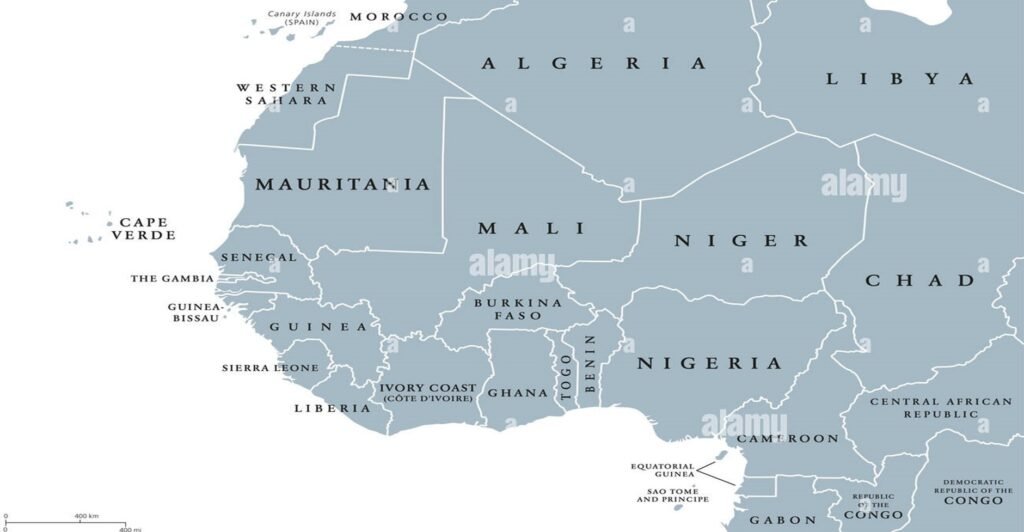
  • The world’s undisputed cocoa powerhouses accounting for over 60% of global supply, Ghana and its West African neighbour Ivory Coast are facing catastrophic harvests.
  • Major African cocoa plants in Ivory Coast and Ghana have stopped or cut processing because they cannot afford to buy beans.
  • A combination of rampant illegal gold mining, climate change, sector mismanagement and rapidly spreading disease are to blame for declining Cocoa production.

Dig Deeper: Map the African countries whose economies are substantially dependent on single agricultural products or natural resources